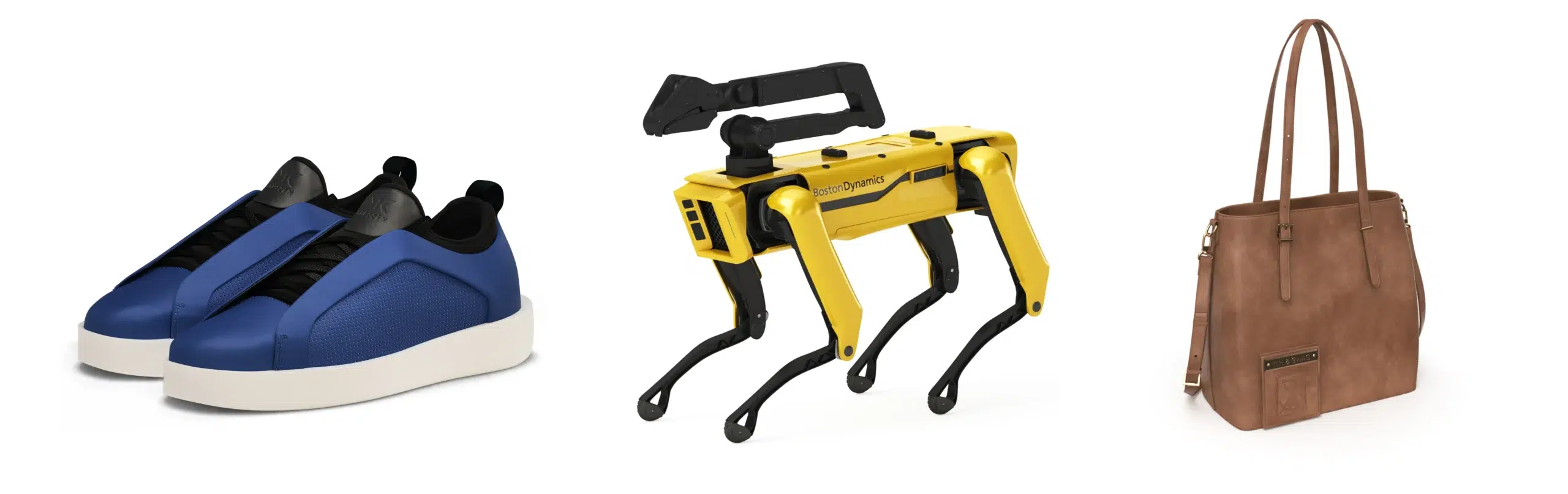
The importance of 3D product rendering for modern businesses has never been greater. In today’s competitive and fast-paced business world, companies need innovative ways to stand out — and 3D product rendering is one of the most powerful tools to achieve this. This technique involves creating detailed, photorealistic digital images of products, used across marketing, development, and customer engagement. Adding 3D content to product pages results in a 94% increase in conversions, which explains why businesses across every industry are rapidly adopting it.
In this blog, we’ll explore the importance of 3D product rendering, addressing aspects such as cost savings, faster time-to-market, and its impact on customer experience.
Why the Importance of 3D Product Rendering Is Growing for Modern Businesses
1. Cost-Effectiveness and Time Savings
One of the primary reasons why 3D product rendering is so crucial for modern businesses is its cost-effectiveness. Traditional methods like photography require products to be physically made, often leading to the production of prototypes or sample models. These physical products can be expensive to produce and photograph, especially if there are multiple variations of the product.
With 3D product rendering, businesses can create highly detailed and photorealistic images without needing to produce the physical item. This not only reduces production costs but also shortens the time required to bring a product to market. It allows businesses to market products before they are even manufactured, which can be especially useful for industries that require rapid turnaround times or for launching limited editions.
The numbers back this up: for one beverage brand, time-to-launch for product variant visuals dropped from 12 days to under 48 hours after switching to 3D rendering — keeping paid media campaigns in sync with product availability instead of waiting on traditional photoshoots.
2. Versatility and Flexibility in Product Renders
The importance of 3D product rendering extends to the versatility it offers businesses. With just one 3D model, companies can create a variety of render types. Each render style serves different marketing and design purposes, ensuring that businesses can showcase their products in multiple contexts. The common types of product renders include:
- Hero Renders: These are clean, isolated images of the product, typically used for product-focused marketing materials, such as e-commerce listings or advertisements.
- Lifestyle Renders: These renders show the product in real-life situations, helping customers envision how the product fits into their daily lives. This is especially useful for items like furniture, fashion, or home goods.

- Cutaway Renders: These are used to reveal the internal workings of a product. They are particularly useful in industries like tech, engineering, and automotive where customers need to understand the components of a product.
- Exploded Views: These renders display the product as if it’s broken apart to show its individual components. They’re often used for instructional materials or product manuals, particularly for complex products that require assembly or explanation.

By utilizing 3D product rendering, businesses can create all these different types of visuals from a single 3D model, making it an efficient tool for both marketing and product development.
3. Enhanced Customer Experience
For modern businesses, providing an exceptional customer experience is critical for building loyalty and driving sales. The importance of 3D product rendering is evident here, as companies can create high-quality, interactive visuals that significantly enhance the customer experience.
Customers today expect to engage with products digitally before making purchasing decisions. Using 3D product renders, businesses can provide customers with detailed, photorealistic images of products that they can interact with in different ways. For instance, customers can view the product from various angles, zoom in to examine finer details, and even customize the product by changing its colors or features. This level of interaction builds real confidence — 66% of shoppers say a 3D configurator on the product page increases their buying confidence, and 82% of viewers actively engage with 3D assets when they appear on a product page.
Additionally, by incorporating 3D product renders into websites or mobile apps, businesses can improve the online shopping experience. Products can be visualized more realistically than with traditional photography, and features like augmented reality (AR) can allow customers to see how products fit into their own environments, increasing the likelihood of a purchase.
4. Streamlining Product Development and Prototyping
The importance of 3D product rendering becomes even more apparent when we look at its role in product development. Traditional prototyping is a lengthy and costly process, often involving the production of physical prototypes, followed by testing, revisions, and re-manufacturing.
With 3D product rendering, businesses can create virtual prototypes, test different design iterations, and make changes digitally before investing in physical prototypes. This significantly reduces costs and accelerates the design process. For example, product designers can experiment with various textures, materials, and features using 3D models, all without the need for physical samples.
This digital approach also reduces the risk of errors during production, as the designs can be validated virtually before any physical product is made. It enables businesses to get to market faster, making 3D product rendering an essential tool for innovation and speed in today’s competitive landscape.
5. Marketing and Advertising Flexibility
The importance of 3D product rendering is evident in its contribution to more dynamic marketing and advertising campaigns. With high-quality renders, businesses can create an array of marketing materials, from product advertisements to promotional videos, all without the need for an expensive photoshoot.
Since 3D product rendering allows businesses to generate images of products in various environments and styles, it ensures that marketing materials remain fresh and versatile. One 3D model can be used in multiple campaigns, customized with different lighting, backgrounds, and product placements. This is a cost-effective way to create consistent, high-quality visuals for online ads, catalogs, and social media platforms.
Moreover, businesses can experiment with different angles and render styles, allowing them to tailor their marketing efforts to specific customer demographics or campaign goals. This flexibility makes 3D product rendering an invaluable asset for marketing teams, particularly when supporting marketing and sales campaigns around a product launch.
6. Supporting E-Commerce and Online Sales
With the rapid growth of online shopping, businesses are increasingly relying on product 3D rendering to improve the e-commerce experience. Traditional product photos often fall short in showcasing the product from multiple angles or providing detailed views of intricate features.
3D product rendering provides an ideal solution for online stores by offering customers interactive product images. This can include 360-degree views, zoom-in features for intricate details, and even the ability to customize the product in real time. Brands on Shopify implementing 3D and AR visualization tools have seen conversion rates jump by up to 200%, with the gains being highest for complex or customizable products where buyers need confidence before purchasing.
Additionally, 3D renders can be easily adapted for various digital platforms, from desktop websites to mobile apps, ensuring that customers have a seamless shopping experience across devices.
7. Sustainable Practices and Reducing Waste
As businesses face growing pressure to adopt sustainable practices, 3D product rendering provides an eco-friendly solution. Traditional product photography often requires the production of multiple physical prototypes, which may never reach the market. This creates waste and consumes resources.
By relying on 3D product rendering, businesses can reduce the need for physical samples, which not only helps lower costs but also supports sustainability efforts. This makes 3D rendering a responsible choice for businesses looking to reduce their environmental impact.
Beyond sustainability, the business case is clear: the 3D visualization market is anticipated to expand by 30% between 2024 and 2031, reflecting a long-term, irreversible shift in how consumers expect to interact with products online.
Which Industries Use 3D Product Rendering the Most?
The importance of 3D product rendering is felt across nearly every product-based industry. However, some sectors have adopted it more aggressively because the visual complexity and product variety make traditional photography impractical and expensive. Here are the industries that benefit most:
Furniture and Home Decor
Furniture is one of the biggest adopters of 3D product rendering — and for good reason. A single sofa can come in 20 fabric options, 5 leg finishes, and 3 sizes. Shooting every combination physically would be prohibitively expensive. With 3D rendering, all variants are generated from one base model. Lifestyle renders also allow furniture brands to show pieces inside beautifully styled interiors, helping customers visualize the product in their own homes — directly increasing purchase confidence and reducing returns.
Fashion and Apparel
Fashion brands use 3D product rendering to visualize clothing, footwear, and accessories before samples are produced. This is especially valuable during the design phase, where rapid iteration is needed. Renders can show fabric texture, stitching detail, and colorways with photorealistic accuracy — cutting sampling costs significantly and accelerating seasonal launches.
Electronics and Consumer Tech
Electronics products demand precision. Customers want to see ports, buttons, finishes, and dimensions clearly before buying. 3D product rendering allows tech brands to produce clean hero shots, cutaway renders showing internal components, and exploded views for manuals — all without expensive studio equipment or the risk of damaging unreleased prototypes during photography.
Automotive and Industrial Products
The automotive industry relies heavily on 3D product rendering for both marketing and engineering. Car configurators — where customers customize color, wheels, and interiors in real time — are entirely powered by 3D rendering. For industrial products like machinery or tools, cutaway and exploded renders help communicate complex functionality clearly to buyers and engineers.
Jewelry and Luxury Goods
Jewelry is notoriously difficult to photograph — reflections, gemstone clarity, and metal finishes require expensive macro setups and skilled photographers. 3D product rendering solves this by producing flawless, ultra-detailed images of rings, necklaces, and watches from any angle, with any metal or gemstone variation, at a consistent quality that photography rarely achieves.
Packaging and FMCG
For fast-moving consumer goods, packaging visuals need to be ready before the physical product is even printed. 3D product rendering allows brands to visualize label designs, bottle shapes, and shelf placement in realistic retail environments — enabling faster go-to-market decisions and more effective packaging design approvals.
E-Commerce and Direct-to-Consumer Brands
Perhaps the broadest adopter of 3D product rendering is e-commerce. Online stores across every category — from home goods to supplements to sporting equipment — use 3D renders to provide 360-degree views, zoom-in details, and AR experiences that traditional product photos simply cannot match. With no physical store for customers to visit, high-quality 3D visuals are the closest thing to holding the product in your hands.
Conclusion
The importance of 3D product rendering for modern businesses cannot be overstated. From reducing costs and speeding up time-to-market to enhancing customer experiences and supporting sustainability, 3D product rendering has become an essential tool in product development, marketing, and e-commerce strategies.
By integrating product 3D rendering into your business operations, you can improve product visualization, streamline development processes, and create compelling marketing materials that drive customer engagement. Whether you’re in manufacturing, fashion, electronics, or e-commerce, embracing 3D rendering will position your business for success in a rapidly evolving market.