Why Outsourcing 3D Architecture Modeling Is on the Rise
In 2026, the demand for high-quality architectural visualization has never been higher. Whether you’re an architect presenting a concept or a developer pre-selling real estate, clients expect photorealistic 3D visuals—delivered fast. Understanding the benefits of outsourcing 3D architecture modeling is becoming essential for firms that want to keep up without expanding headcount. If you are weighing this up across a whole project pipeline, our complete guide to outsourcing architectural visualization covers the process, the real costs and how to choose a studio.
Since building an internal 3D team can be costly, time-consuming, and difficult to scale, many firms are choosing to collaborate with external modeling specialists who can create precise, detailed models directly from CAD files, blueprints, or sketches.
What Is Outsourced 3D Architecture Modeling?

Outsourcing means hiring an external studio or freelancer to handle your 3D modeling, rendering, or visualization needs. This can include:
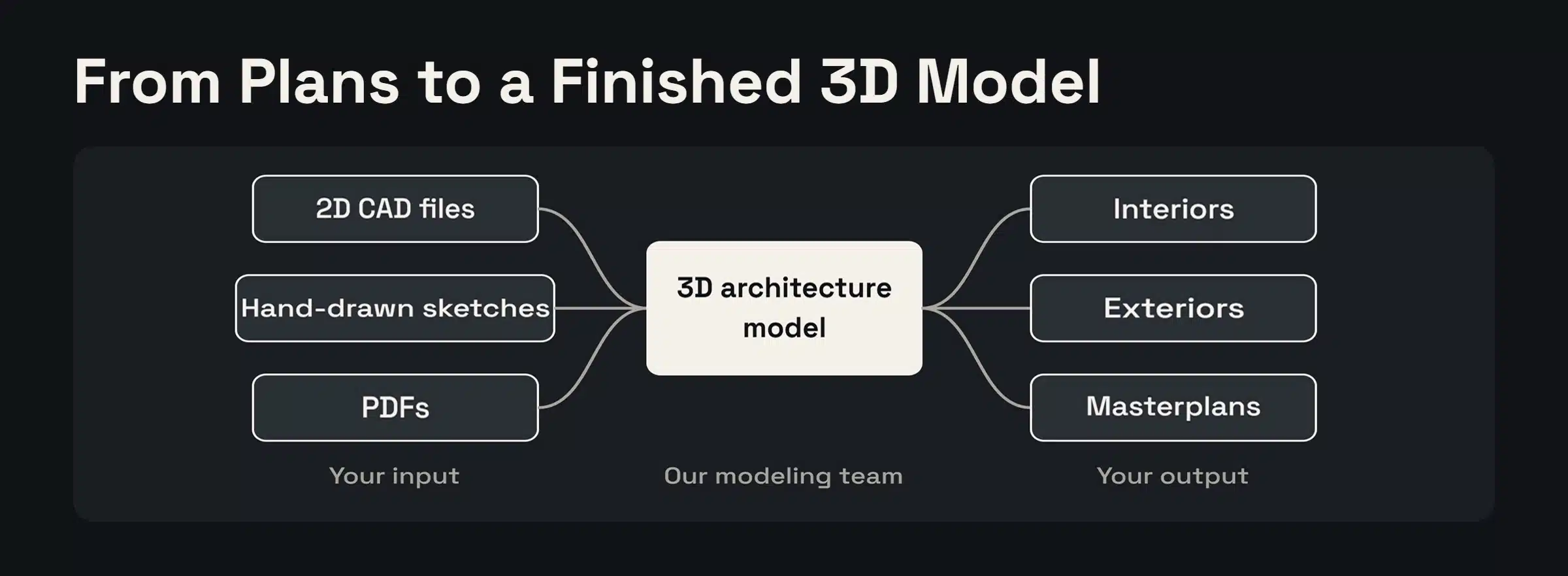
- Modeling from 2D CAD files, hand-drawn sketches, or PDFs
- Accurate geometry for interiors, exteriors, or entire masterplans
- Environment and site modeling for larger developments
- Virtual staging and furniture modeling for spatial planning
- Modular or parametric modeling for repeated use in large-scale projects
This approach lets design teams scale up their production without increasing internal overhead.
Top 6 Benefits of Outsourcing 3D Architecture Modeling
1. Lower Costs Compared to an In-House Team
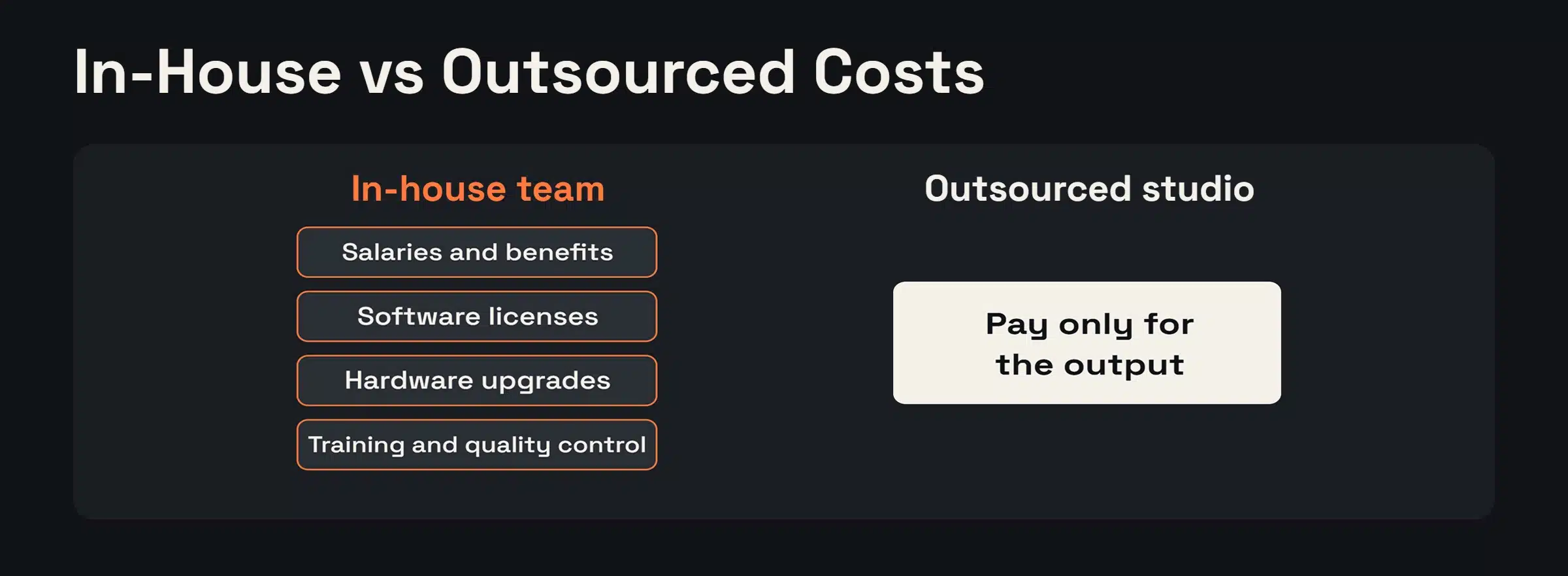
Building an in-house 3D modeling team involves more than an artist’s salary. Businesses must also consider software licenses, hardware upgrades, training, and ongoing operational costs. These expenses continue even when project demand slows down.
Outsourcing 3D architecture modeling offers an alternative. Instead of maintaining all production resources internally, you can hire an external modeling team based on your project requirements. This allows you to manage costs according to your workload without committing to additional full-time staff.
For firms with fluctuating workloads, outsourcing can help reduce fixed overhead while providing access to the modeling resources needed for individual projects. The actual savings depend on project complexity, volume, turnaround time, and the level of support required.
2. Faster Project Delivery
In architecture, time is frequently of the essence, particularly when it comes to client presentations, contests, or development clearances. Specialized 3D modeling studios use parallel teams, pre-built asset libraries, and streamlined workflows.
This implies that internal work that could take weeks can be finished in a matter of days. Their knowledge of naming conventions, layering standards, and modeling tools guarantees a seamless integration into your project workflow.
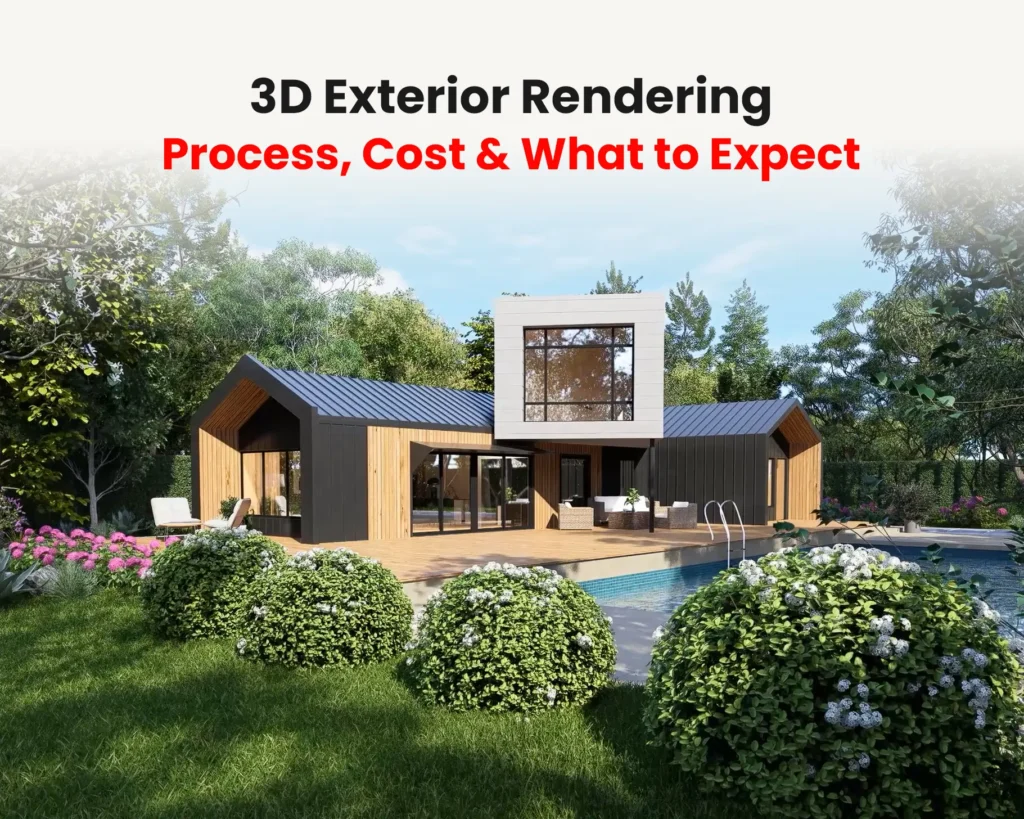
For example, exterior models can often be completed in under a week with the right brief.
3. Access to Specialized Modeling Expertise
Accurate architectural modeling requires more than familiarity with 3D software. Artists must understand architectural drawings, dimensions, building components, and the level of detail needed for the intended use.
An experienced modeling team can interpret 2D CAD files, hand-drawn sketches, and PDFs to build the geometry required for interior, exterior, and masterplan projects. Clear references help the team maintain proportions, identify missing information, and produce models that meet the project’s specifications.
By outsourcing, architecture firms and developers can access specialized modeling skills without recruiting and training every specialist internally. This is particularly useful when a project requires production expertise that the existing team does not have available.
4. Handle Larger Workloads with Parallel Teams
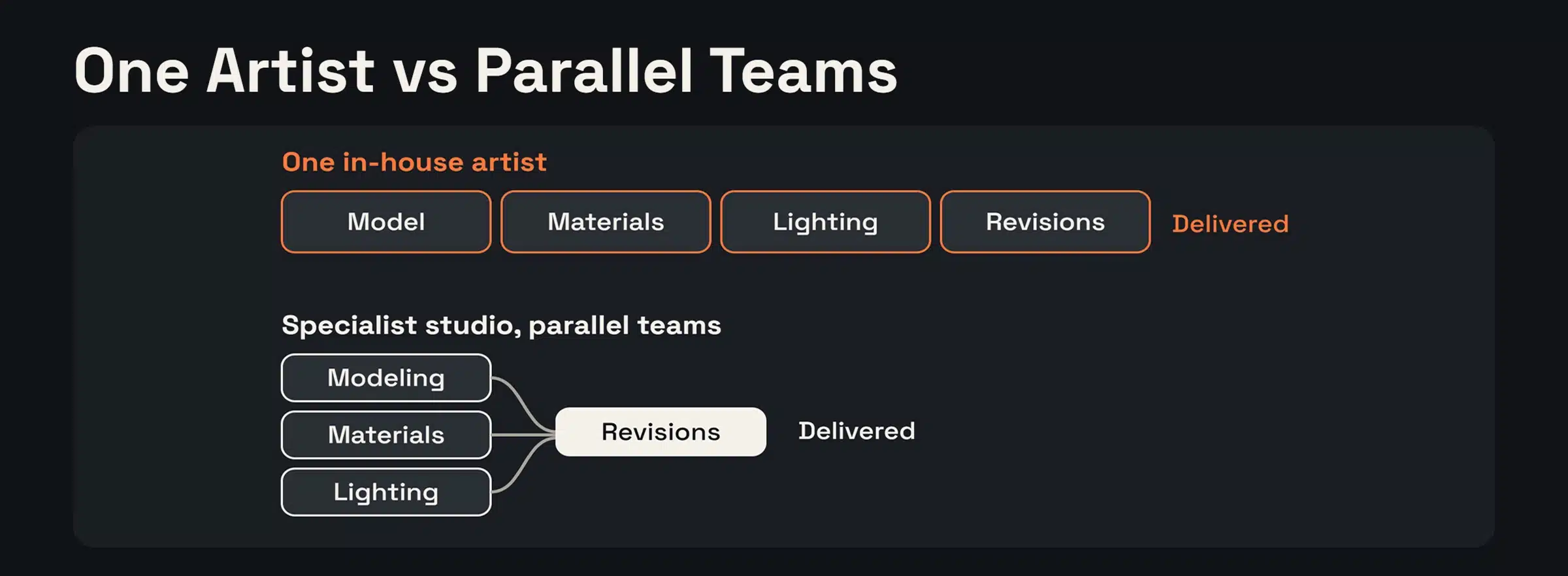
A single 3D artist can manage a steady workload, but several projects with overlapping deadlines can quickly stretch that person’s available time. Every additional assignment competes for the same production hours, making urgent requests and revisions more difficult to accommodate.
Outsourcing provides access to additional modeling capacity when your workload increases. Depending on the project structure, multiple artists can work on separate models or different components of a larger project simultaneously.
For example, a developer preparing several property listings may need multiple interior and exterior models within a short period. A coordinated external team can distribute suitable tasks across artists, helping the projects progress in parallel instead of relying on one person to complete every model sequentially.
This approach is particularly useful when several deliverables must be prepared within the same project timeline.
5. Flexibility Without Long-Term Commitments
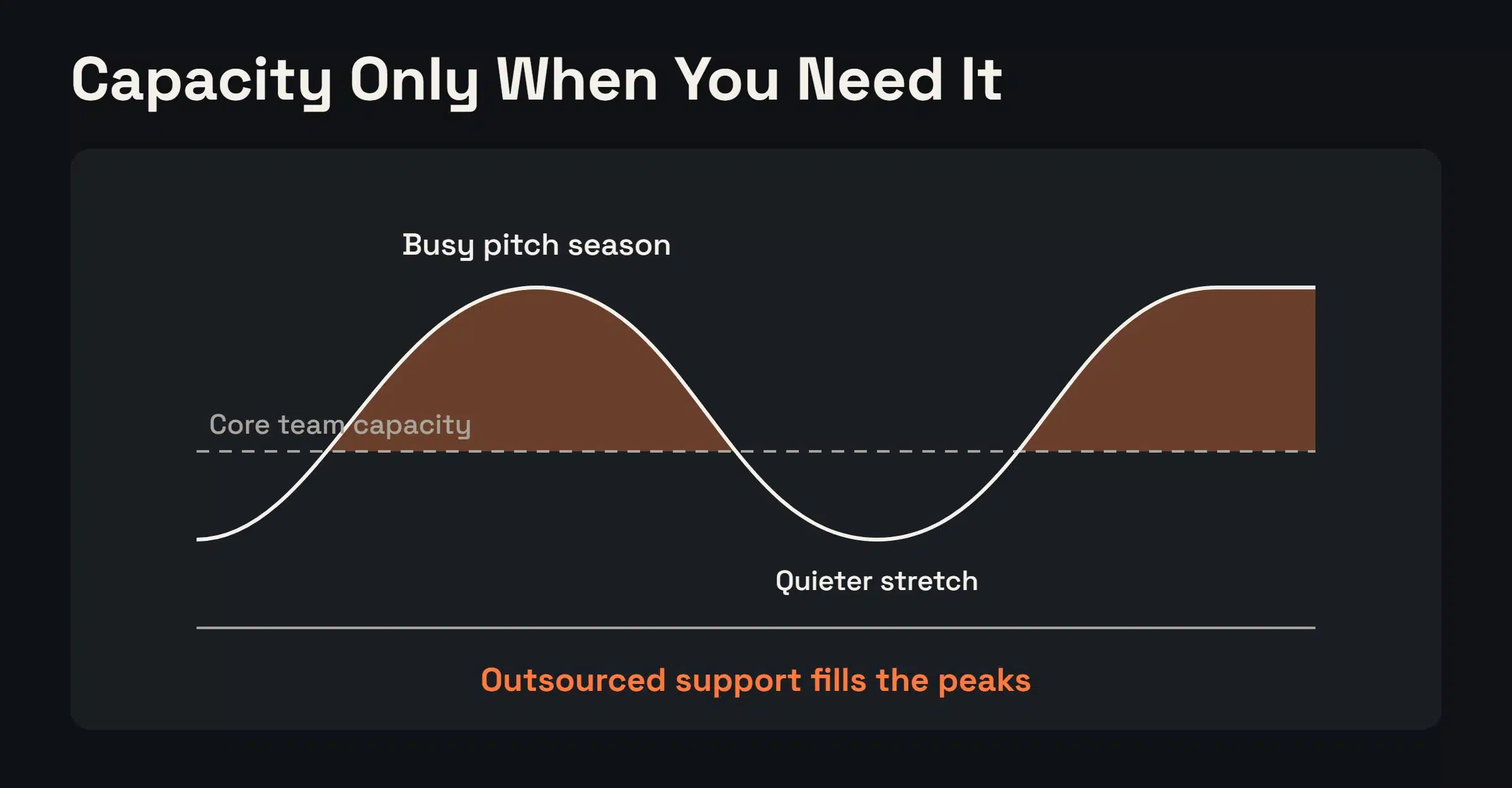
Project demand rarely stays consistent throughout the year. A firm may face a busy pitch season with several overlapping deadlines, followed by a quieter period with fewer modeling requirements.
Maintaining additional full-time staff for occasional demand can increase fixed costs during slower periods. Outsourcing allows you to bring in external modeling support when projects require it and adjust that support as workloads change.
This flexibility helps firms respond to changing project volumes without permanently expanding their internal teams. It can be especially useful for smaller architecture firms, developers, and visualization agencies that need extra production capacity at specific stages of the year.
6. More Consistent Production Workflows
Managing multiple architectural modeling projects can become difficult when different artists use inconsistent file structures, naming conventions, or levels of detail.
Working with an experienced modeling partner can help establish clear expectations for geometry, dimensions, file organization, and deliverable formats. Agreed standards make models easier to review and integrate into existing project workflows.
Consistency still depends on clear briefs, effective communication, and quality checks. Providing reference drawings, technical specifications, and feedback early in the process helps ensure that the delivered models align with your requirements.
7. More Time for Design and Core Business Activities
Architects and design teams need time for concept development, design refinement, client meetings, and project coordination. Handling every technical modeling task internally can take time away from these responsibilities.
By outsourcing production-heavy modeling work, your team can focus on design decisions and other activities that require its direct involvement. Your internal staff can review models, provide feedback, and manage the broader project while the external team handles the agreed modeling tasks.
This division of responsibilities can help firms make better use of their existing resources without compromising their attention to core project activities.
8. Support for Different Project Requirements
Not every architectural project requires the same modeling approach. A residential interior, a commercial exterior, and a large development masterplan can involve different levels of detail, geometry, and coordination.
An external modeling partner with the appropriate capabilities can support different project types and scopes as your requirements change. This gives your firm more flexibility when taking on new assignments without having to build an internal team for every possible production need.
By defining the intended use, required detail, reference materials, and deliverable specifications at the beginning, you can select the appropriate level of modeling support for each project.
Case Study: Outsourcing 3D Modeling for a Residential Project
Client: Mid-size developer launching 12-townhome project
Challenge: Needed 6 interior and 4 exterior visuals in 10 days
In-House Option: Estimated 3 weeks and over $4,000 in design hours
Outsourced to 4dviz Studio: Delivered in 7 business days for $2,100
✅ Client used visuals in sales brochure, website, and print ads
✅ 3 townhomes pre-sold before construction began
✅ 50% lower visualization cost vs. internal approach
Curious how a finished project looks in practice? Take a look at our 3D house rendering case study for a full breakdown.
Final Thoughts: Why Outsource Your 3D Architecture Modeling?
Let’s recap the benefits of outsourcing 3D architecture modeling:
| Benefit | Impact on Your Business |
| Cost Savings | 40–70% lower than in-house teams |
| Speed | Deliver projects 2–3x faster |
| Quality | Industry-grade photorealism |
| Scalability | Handle multiple projects with ease |
| Flexibility | No long-term commitment |
| Focus | More time for core design work |
Ready to Outsource Your Next 3D Project?
Let us help you deliver high-quality architectural visuals—faster, smarter, and more affordably.
Contact 4dviz Studio today for a free consultation or quote.