Furniture brands are under more pressure than ever to show realistic, detailed product visuals, and traditional photography can’t always keep up. A new reshoot for every color variant, studio costs for every new SKU, and waiting on physical samples before a product can even be photographed all slow a launch down.
3D furniture modeling services solve this by building a photorealistic, AR-ready model of a product once, then reusing it across catalog images, lifestyle scenes, configurators, and marketing, all without a second physical sample. At 4dviz, this runs through the same 3ds Max and V-Ray/Corona pipeline used across our furniture and product rendering work, delivered at transparent, published pricing rather than a quote-only estimate.
This 3D furniture modeling guide covers what 3D furniture modeling services involve, the different model types available, how the process works, what it costs, and how to choose the right studio.
What Are 3D Furniture Modeling Services?
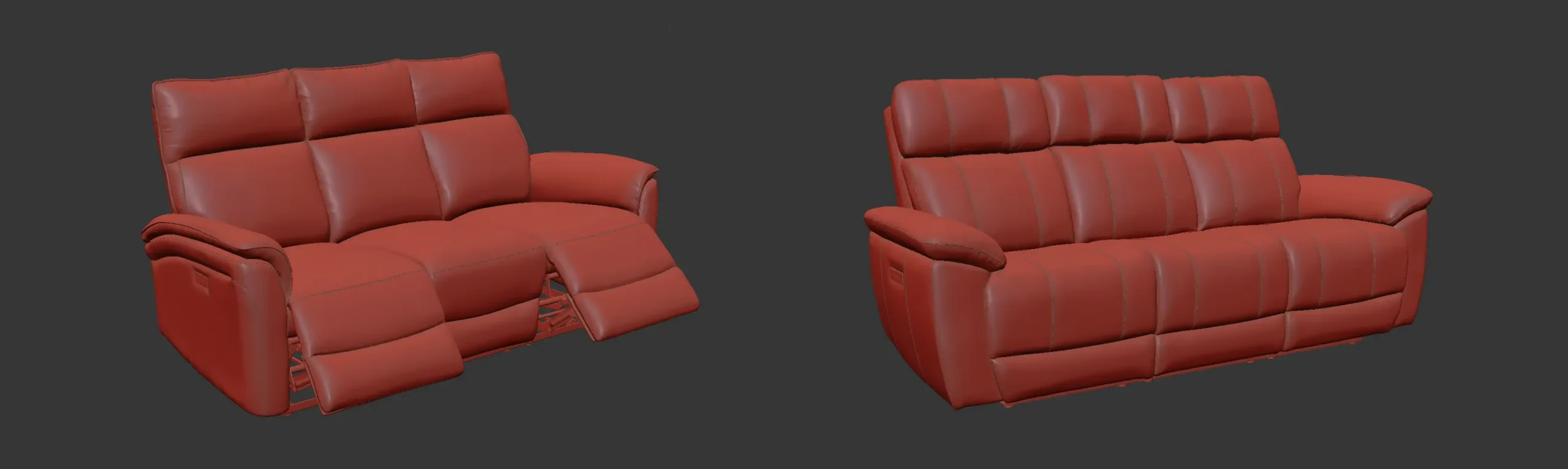
3D furniture modeling services involve building detailed, computer-generated representations of furniture using specialized 3D software. Every model is built with accurate geometry, correct proportions, and realistic materials so it replicates how the physical product will actually look.
Unlike photography, 3D modeling doesn’t need a physical sample or a studio setup. The product is built digitally instead, which makes it possible to generate visuals before manufacturing is even finished, or to produce multiple color and finish variations from a single build. Furniture brands, manufacturers, and designers use these models to support product development, marketing, and online sales — often generating several different outputs (a clean catalog shot, a styled lifestyle scene, an AR-ready asset) from the same underlying model.
Why Do 3D Furniture Modeling Services Matter?
Furniture is a high-consideration purchase, and online shoppers want more than a flat product photo before they buy. They want to judge real proportions, see accurate textures and fabric detail, and get a sense of how a piece would actually look in a room. 3D modeling closes that gap between browsing and physically seeing the product.
It also enables things photography can’t. AR try-before-you-buy tools (the kind IKEA and other major retailers use) require an optimized 3D model, not a photo — there’s no way to let a customer place a photo in their living room. And because a 3D model exists before manufacturing is finished, brands can render products, test design variations, and build marketing assets well ahead of a physical launch, shortening the time between a finished design and a live product page.
How Do 3D Furniture Modeling Services Work?
At a high level, the process turns technical specs or reference material into a digital model, then adds materials and lighting to make it look real. A modeler builds the geometry to match exact dimensions, an artist applies textures that replicate real materials (wood grain, fabric weave, metal finish), and the scene is lit and rendered to produce the final image or interactive asset. The same model can then be exported in different formats depending on where it’ll be used — a static image for a catalog, a GLB file for AR, or an optimized low-poly version for a web configurator.
Industries That Benefit from 3D Furniture Modeling
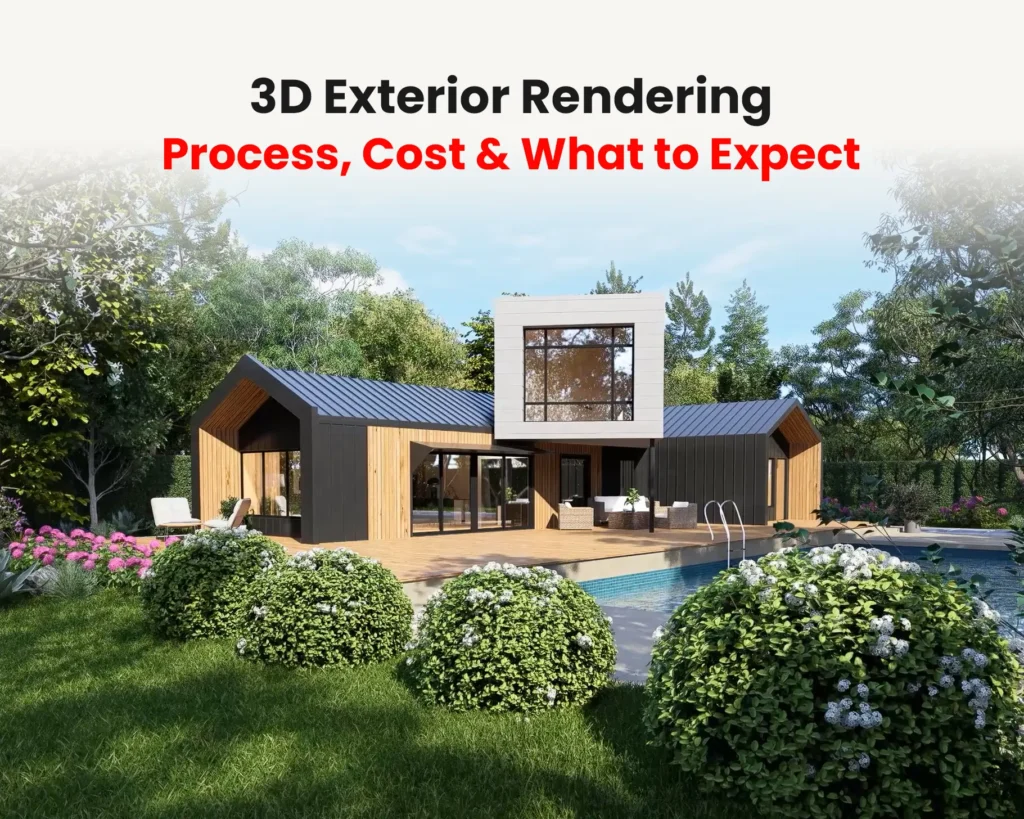
3D furniture modeling isn’t limited to retailers selling direct to consumers. Furniture manufacturers use it to visualize products before a production run is finalized. Interior designers use it to show clients exactly how a specified piece will look in a room before committing to the purchase. Real estate developers and hospitality design firms use furniture models to populate architectural renders of unfurnished spaces, so a listing or a property pitch shows a fully realized interior rather than an empty room. Architectural visualization studios and marketing agencies use the same models as building blocks for larger campaign or presentation work rather than modeling furniture from scratch for every project.
Major online furniture retailers, including Wayfair, rely heavily on 3D and AR-ready product visuals to compete in a market where customers can’t physically handle the product before buying — a pattern that’s pushed 3D modeling from a nice-to-have into standard practice across the industry, not just for large retailers.
Key Benefits
A cost-effective alternative to photography. A traditional photoshoot means renting a studio, shipping physical product, setting up lighting, and reshooting for every revision. A 3D model needs none of that. Once the model exists, lighting and camera angles can be changed instantly, and a single build can generate every variation a brand needs instead of paying for a new shoot per SKU or colorway.
Creative flexibility photography can’t match. The same model can produce a clean white-background render for a catalog, a fully styled lifestyle scene for a campaign, a seasonal marketing visual, a close-up material shot highlighting stitching or wood grain, or a technical cutaway showing internal construction, all from one build. Producing that same range with physical photography would mean multiple separate shoots, each with its own setup cost.
Stronger customer confidence and fewer returns. Detailed 3D visuals let customers inspect texture quality, proportions, and material combinations closely before buying, closer to how they’d examine the piece in a showroom. That tends to translate into more confident purchases and fewer returns driven by a product not matching what the customer expected from a flat photo.
Faster iteration during development. Because the model exists digitally before manufacturing, design variations, material swaps, and proportion tweaks can be tested and approved without waiting on a new physical sample for each change, shortening the path from concept to a finished, sellable product.
Consistency across a full product catalog. Photography can vary shoot to shoot in lighting, angle, and color accuracy, especially across large catalogs shot over time. 3D models render under controlled, repeatable lighting setups, so a brand’s entire catalog can maintain visual consistency even as new products are added.
Step-by-Step Process
1. Brief and asset collection. You provide technical drawings, measurements, reference images, material specs, and brand guidelines. The clearer this input, the more accurate the model.
2. 3D modeling. The furniture’s geometry is built to match real-world scale and structural proportions. At 4dviz, this is done in 3ds Max.
3. Texturing and materials. Realistic materials are built for wood grain, metal finishes, upholstery fabric, leather, glass, and any other surface in the piece, using high-resolution texture mapping for realism.
4. Lighting and rendering. Lighting is set up to achieve photorealism, whether that’s simulated studio lighting, natural daylight, or a specific mood the brief calls for. Rendering is handled through V-Ray or Corona.
5. Post-production and delivery. Final touches like color correction, background cleanup, and shadow refinement are applied, and files are delivered in whatever format the use case needs (JPEG, PNG, WebP, GLB, FBX, OBJ).
Types of 3D Furniture Modeling
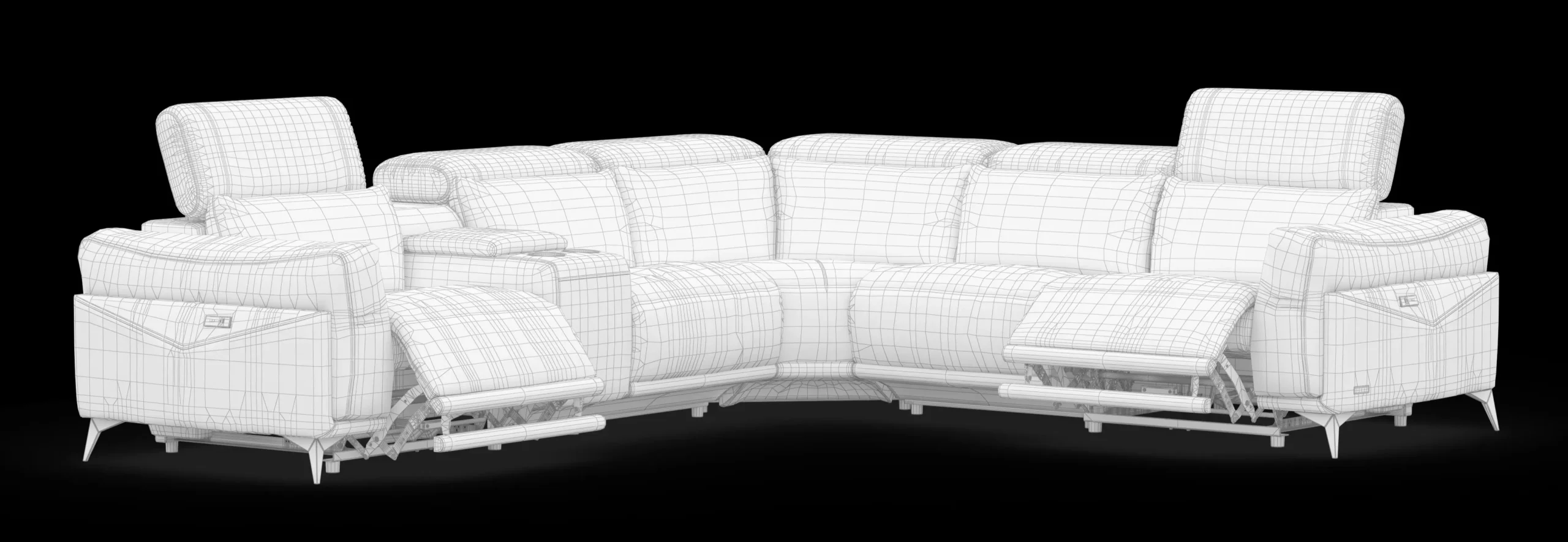
High-poly photorealistic modeling. Dense geometry and refined detail, capturing things like stitching, wood grain, and fabric texture. Used for lifestyle renders, advertising visuals, and premium catalog imagery where realism is the priority.
Low-poly optimized models. Simplified geometry that keeps proportions accurate while cutting file size, built for fast loading in web viewers, mobile apps, and AR. Essential for interactive product experiences where performance matters as much as visual quality.
CAD-based modeling. Built from technical drawings and engineering specs rather than for visual presentation. Used to validate structure and confirm a design is actually manufacturable before production.
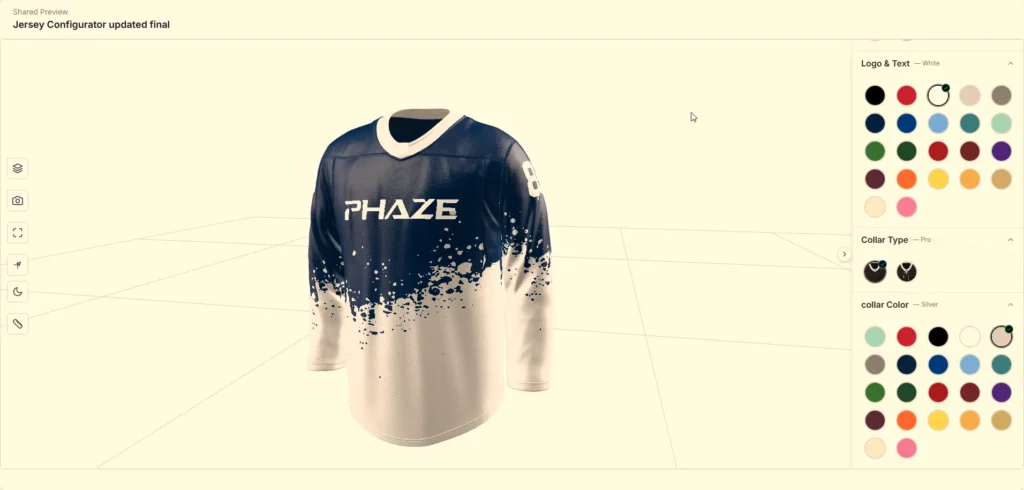
Configurator models. Interactive 3D models built for customization tools, letting customers change size, material, color, or fabric in real time. Common on modern e-commerce platforms selling customizable furniture, where letting a buyer see their exact configuration before ordering tends to reduce hesitation.
Cost
Furniture 3D modeling pricing runs across three tiers, based on complexity and polygon count:
- Basic — from $25. Simple pieces with straightforward geometry and a single finish.
- Standard — from $35. Moderately complex pieces or a small number of material variations.
- Premium — from $45. Complex, multi-component pieces or several finish and configuration variations on the same model.
What moves a piece up a tier: the number of materials or finishes it needs, how many components or moving parts it has, and whether it needs to support multiple formats (a high-poly marketing render and a low-poly configurator version of the same piece, for instance).
Common Mistakes to Avoid
Providing incomplete reference material. Vague dimensions or missing material specs lead to more revision rounds, since the modeler is left guessing at details that should have been in the brief.
Choosing a studio based on price alone. A cheaper quote that delivers an inaccurate model or inconsistent quality across a product line costs more in revisions and lost credibility than it saves upfront.
Not planning for multiple use cases upfront. If a model will eventually need a low-poly AR version alongside a high-poly marketing render, briefing both at once is more efficient than commissioning them separately later.
Skipping portfolio review for material accuracy. A portfolio can look impressive at a glance but still get material behavior wrong — check specifically for how fabric, wood, and metal are rendered, not just overall composition.
Expert Tips
Look for a studio with a portfolio that shows consistent lighting and real-world scale accuracy across multiple projects, not just one standout image. Ask directly about revision policy, typical turnaround time, and whether they can deliver both high-poly and low-poly versions of the same model, since needing both later is common. Clear, documented communication throughout the project (milestones, technical specs, file naming) matters more than it seems for anything beyond a single simple model.
FAQs
How much do 3D furniture modeling services cost?
Pricing starts from $25 for a Basic package, with Standard at $35 and Premium at $45, depending on the complexity of the piece and how many material or finish variations are needed.
What software is used for 3D furniture modeling?
At 4dviz, models are built in 3ds Max with V-Ray or Corona for rendering and lighting.
Can the same 3D model be used for both marketing and AR?
Yes, though it usually needs two versions — a high-poly model for photorealistic marketing renders and a separate low-poly, optimized version for AR and web viewers.
Do I need finished technical drawings to start?
No. A model can be built from reference photos, rough sketches, or measurements if formal CAD files aren’t ready yet.
How long does 3D furniture modeling take?
Turnaround depends on the piece’s complexity and how many finish or format variations are needed — a single piece in one finish is faster than a configurator-ready model with multiple material options.
Conclusion
3D furniture modeling services have become a practical alternative to traditional photography for furniture brands, manufacturers, and designers who need realistic, flexible product visuals. A single 3D model can support a catalog listing, a styled marketing scene, and an AR experience, all without a second physical sample once the model exists.