
3D product rendering for furniture is evolving fast — and 2026 is bringing changes that directly impact how brands sell online.
From AI-accelerated workflows to AR-powered shopping experiences, the way furniture is visualized, marketed, and sold has shifted dramatically. Brands that stay ahead of these trends don’t just look better — they convert more, spend less on production, and launch faster than competitors still relying on traditional photography.
Here are the top 3D product rendering trends furniture brands need to know in 2026.
Top Trends Shaping Furniture Rendering in 2026
Real-Time Rendering
Real-time rendering has moved from gaming technology into mainstream furniture retail. Brands are now embedding interactive 3D viewers directly on product pages — letting shoppers rotate, zoom, and inspect furniture from every angle without loading delays. Unlike pre-rendered static images, real-time outputs update instantly as users interact, creating a showroom-level experience online.
AR-Powered Shopping Experiences
Augmented reality is no longer a novelty — it is an active purchase driver. Furniture shoppers can now place a sofa, dining table, or bookshelf into their actual room using a smartphone camera before buying. Platforms like Shopify and Amazon already support AR product viewing natively, making AR-ready 3D models a practical necessity for furniture brands selling online.
AI-Accelerated Rendering Workflows
Artificial intelligence is now embedded in professional rendering pipelines. AI-powered denoising, automated lighting optimization, and intelligent texture generation are cutting rendering time significantly — without sacrificing output quality. For furniture brands with large catalogs, this means faster asset delivery and lower per-image production costs.
Hyper-Realistic PBR Materials
Physically Based Rendering (PBR) has become the new baseline for furniture visualization. PBR materials simulate how light actually behaves on wood grain, fabric weave, leather, and metal finishes — producing renders that are increasingly difficult to distinguish from studio photography. In 2026, brands using PBR materials are setting the visual standard that buyers now expect.
Sustainable Virtual Prototyping
Physical prototype production generates material waste, shipping emissions, and significant cost — especially during early design stages. 3D rendered prototypes allow furniture manufacturers to validate designs, test colorways, and present collections to buyers entirely digitally, before a single piece is manufactured. This is becoming standard practice among sustainability-conscious furniture brands.
Product Configurators Replacing Static Galleries
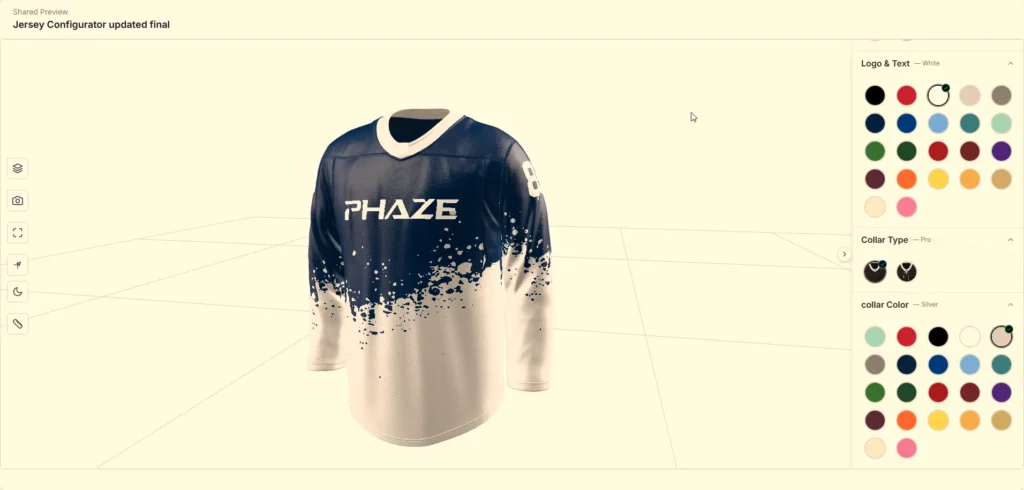
Static image galleries are losing ground to interactive product configurators. Furniture brands are now letting customers build their own version of a product in real time — choosing fabric, finish, size, and leg style — with the 3D render updating live. This reduces purchase hesitation, increases average order value, and dramatically cuts return rates. See how it works with our 3D product configurator.
CGI Replacing Photography for Marketplace Listings
Amazon, Wayfair, and Shopify sellers are increasingly replacing traditional product photography with CGI renders for their main listing images. CGI delivers pixel-perfect consistency across an entire catalog, allows instant updates when colorways change, and eliminates the cost and logistics of studio shoots entirely. Major furniture retailers have already made this shift at scale.
Render-to-Video and Stop Motion CGI for Social Media
Static renders are no longer enough for social media performance. Furniture brands are now producing short-form CGI videos — product reveal animations, material close-ups, and stop motion sequences — entirely from 3D models, without any filming. These assets perform significantly better on Instagram, Pinterest, and TikTok than static product images.
White-Label 3D Rendering for Agencies
Interior design agencies, marketing studios, and ecommerce consultants are increasingly outsourcing 3D furniture rendering under their own brand. Rather than building in-house CGI capabilities, agencies partner with specialist rendering studios to deliver photorealistic assets to their clients. This white-label model is growing rapidly as demand for 3D visuals outpaces in-house capacity across the industry.
360° Spin Becoming the Ecommerce Standard
360° product spins — where shoppers can rotate a furniture piece through a full rotation — are transitioning from a premium feature to an expected standard on furniture ecommerce platforms. Brands still using single-angle static images are increasingly at a conversion disadvantage compared to competitors offering full spin or multi-angle interactive views.
Why Furniture Brands Are Turning to 3D Product Rendering
Eliminating Costly Photoshoots
Traditional furniture photoshoots require physical prototypes, studio rentals, lighting setups, and weeks of logistics. 3D product rendering eliminates all of that — delivering the same photorealistic quality digitally, without a single physical sample leaving the warehouse. For furniture brands managing large catalogs, this alone cuts production costs significantly.
Accelerating Time-to-Market
Furniture collections can’t wait on manufacturing timelines. With 3D rendering, brands can produce complete visual assets — hero shots, lifestyle scenes, variant swatches — before the product is even built. What used to take weeks now takes days, giving marketing teams a real head start on every launch.
Unlimited Variant Visualization
Showing the same sofa in eight fabrics and four leg finishes used to mean eight separate photoshoots. With 3D product rendering, every color, material, and configuration is generated from a single model — instantly, consistently, and at a fraction of the cost.
Key Benefits of 3D Product Rendering for Furniture Brands

Unlimited Design Variations
Showcase every color, fabric, and finish from one 3D model — no reshooting, no restocking, no delays. Furniture brands with large SKU catalogs benefit the most from this flexibility.
Higher Customer Engagement
Photorealistic 3D visuals keep shoppers on product pages longer. Interactive renders and 360° views give customers the confidence to explore a product the way they would in a physical showroom — without leaving home.
Seamless E-commerce Integration
3D rendered assets work across every channel — product listing pages, AR shopping apps, social media, and digital catalogs — all from the same source file.
Faster Campaign Turnaround
Marketing teams no longer wait on photo production schedules. 3D assets can be updated, resized, and repurposed for seasonal campaigns in days, not weeks.
How 3D Product Rendering Grows Furniture E-commerce Sales
| What You Get | What It Does for Your Business |
|---|---|
| Photorealistic product visuals | Builds instant buyer trust and reduces purchase hesitation |
| Multi-variant renders from one model | Faster product launches without additional photography costs |
| Interactive 360° and AR experiences | Longer time on page, lower cart abandonment |
| Pre-production marketing assets | Sales campaigns ready before manufacturing is complete |
| Consistent visuals across all channels | Stronger brand presentation on every platform |
Popular Tools for 3D Product Rendering in Furniture Industry
- Blender — Free, open-source, powerful.
- Autodesk 3ds Max — Industry standard for high-end visualizations.
- V-Ray — Exceptional photo-realistic rendering quality.
- KeyShot — Easy-to-use for quick, high-quality product renders.
The Brands That Adapt Early Win
The furniture brands pulling ahead in 2026 are not necessarily the biggest — they are the ones adopting smarter visual production. Real-time rendering, AR shopping, AI workflows, and CGI-powered social content are no longer future possibilities. They are active competitive advantages being used right now by brands in your market.
The shift from traditional photography to 3D product rendering is not about cutting costs alone — it is about building a visual infrastructure that scales. One model. Infinite outputs. Every channel covered.
If your furniture brand is still relying on photoshoots for every product update, every variant, and every seasonal campaign — the gap between you and your competitors is growing.
Explore our 3D furniture rendering services to see how we help brands make the switch.