A dedicated furniture 3D rendering service is the best option when you sell dozens of SKUs, offer the same piece in several fabrics or finishes, launch products before they are manufactured, or need every catalog image to look like it came from one shoot. In those cases it beats photography on cost, speed and consistency, and it beats a one-off freelancer on reliability at volume.
For catalog images, the strongest providers share four traits: furniture-grade material realism, a locked lighting and camera setup for SKU consistency, transparent per-SKU pricing, and models that can be reused for 360 views and AR. 4DVIZ is built around those traits. This guide shows you how to verify them on any vendor, including us, before you commit.
What a catalog-grade furniture rendering service must deliver
| Criterion | What good looks like | Quick test |
|---|---|---|
| Photorealism | Stitching, grain and edge detail hold up at 100% zoom | Open portfolio images at full size |
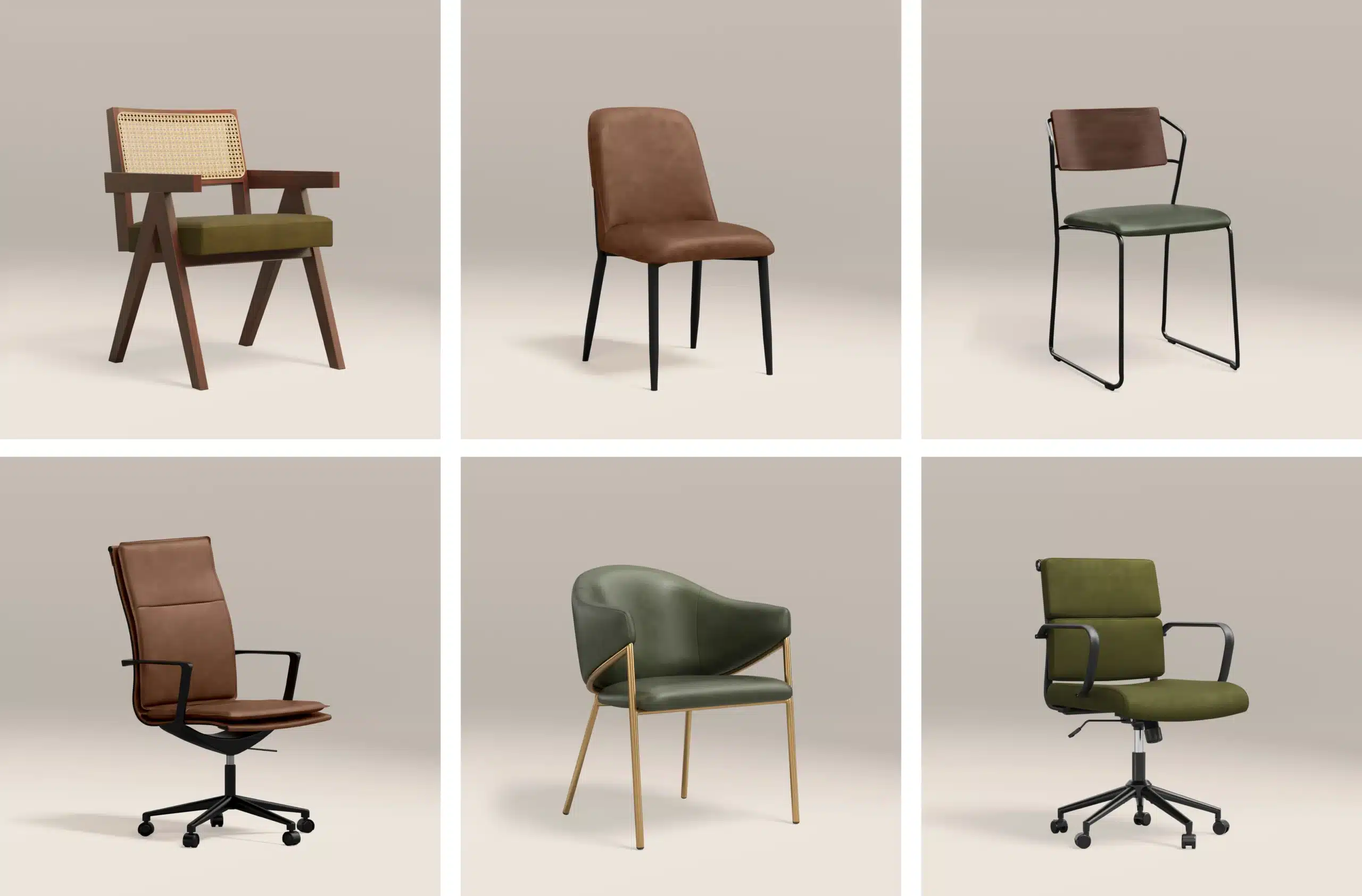
| SKU consistency | One camera, light and background logic across every SKU | Place six SKUs in a grid |
| PBR materials | Fabric, wood, leather and metal react correctly to any light | Ask for one material in two lighting setups |
| Turnaround | A stated average and a schedule for your batch size | Ask for time to first proof |
| Pricing transparency | Cost per finished SKU, with scope in writing | Convert the quote to a per-SKU total |
| AR and VR readiness | GLB and USDZ delivered from the same model | Ask for a sample file |
When a furniture 3D rendering service is the best option
- You have a large or growing catalog. A photo shoot means shipping samples, styling and reshoots for every product. A render is built once and reused.
- You sell one piece in many fabrics, woods or colors. A variant is a material change on an existing model, not a new shoot.
- The product is not built yet. You can list, pre-sell and pitch dealers before the first unit exists.
- Consistency matters over time. The same camera and lighting can be reproduced next season for a new SKU.
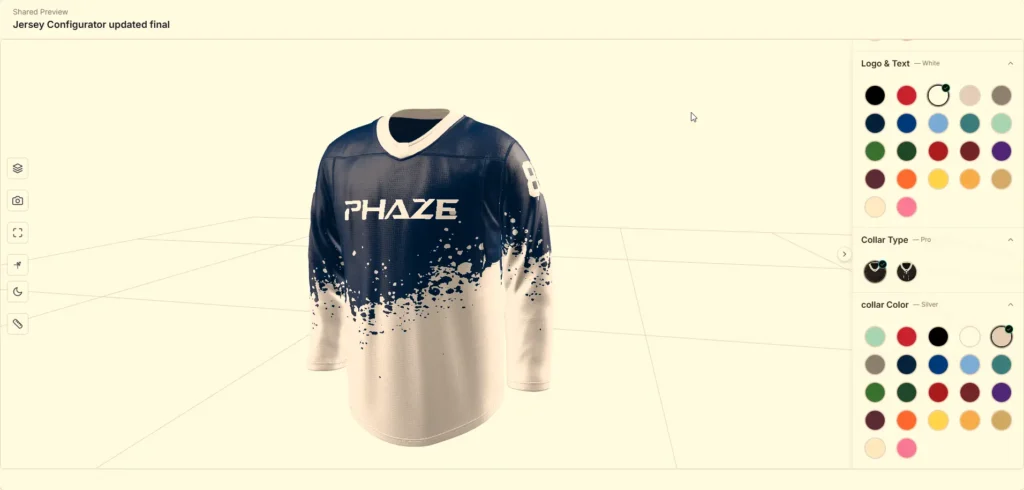
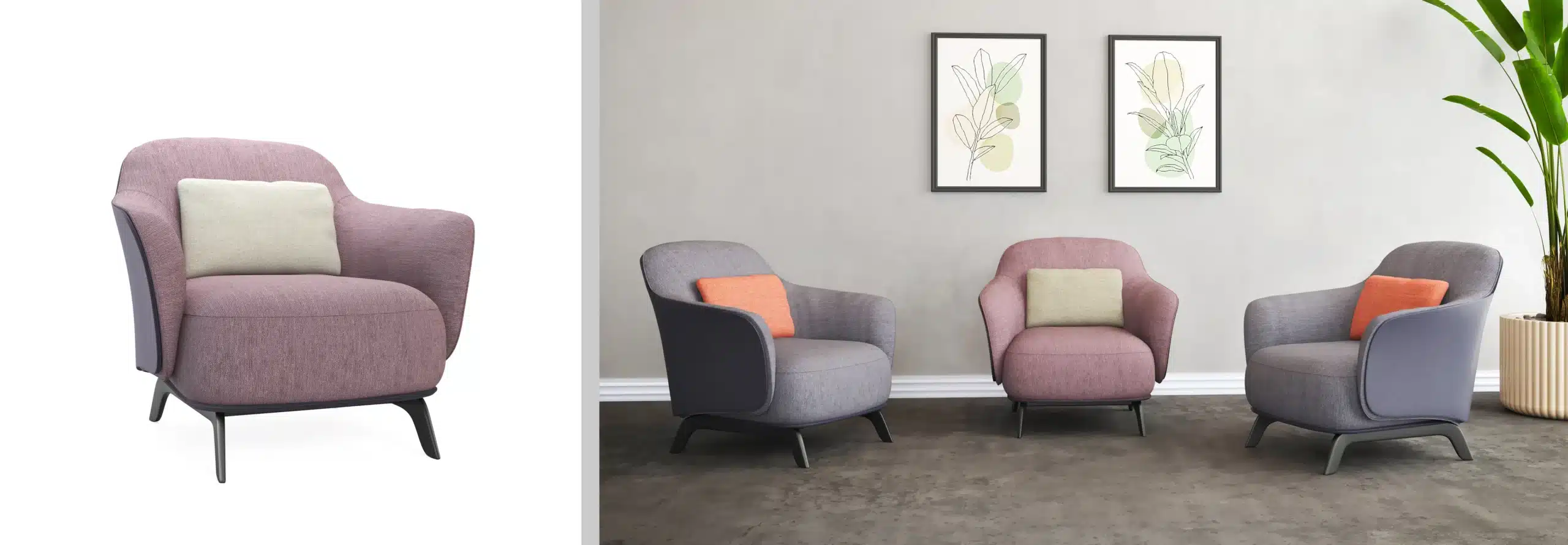
- You want one asset for several channels. The model behind a catalog image can also drive a 360 spin, a configurator or an AR viewer.
- You run seasonal campaigns. New room scenes can be built around products you already own digitally.
Photography can still make sense if you sell a handful of products with unusual handmade textures and already have strong images. As the catalog grows, the case for 3D gets stronger with every SKU.
Best furniture rendering providers for catalog images
Not every rendering provider is built for catalog work. Here is how the main types compare.
| Provider type | Best for | Watch for |
|---|---|---|
| Full-service 3D visualization studio (4DVIZ) | Brands that want furniture stills, lifestyle scenes, product renders and AR-ready models from one team | Confirm furniture samples and a per-SKU price |
| Furniture-only CGI studio | Deep focus on one category | Narrower range if you also need interior scenes or other product types |
| Per-image studio | Small orders and one-off hero images | Per-image totals climb across a big catalog, so ask for a per-SKU number |
| Platform-led vendor | 360 views and hosted configurators | Judge it as software plus content, not as a rendering quote |
| Freelancer or marketplace artist | Single pieces and tight budgets | Consistency and capacity at volume, and who owns the files |
For catalog work, a studio that keeps modeling, materials and rendering in one pipeline has the edge, because consistency is set once and reused across every SKU. That is how we run furniture projects at 4DVIZ.
Six criteria for choosing a furniture 3D rendering service
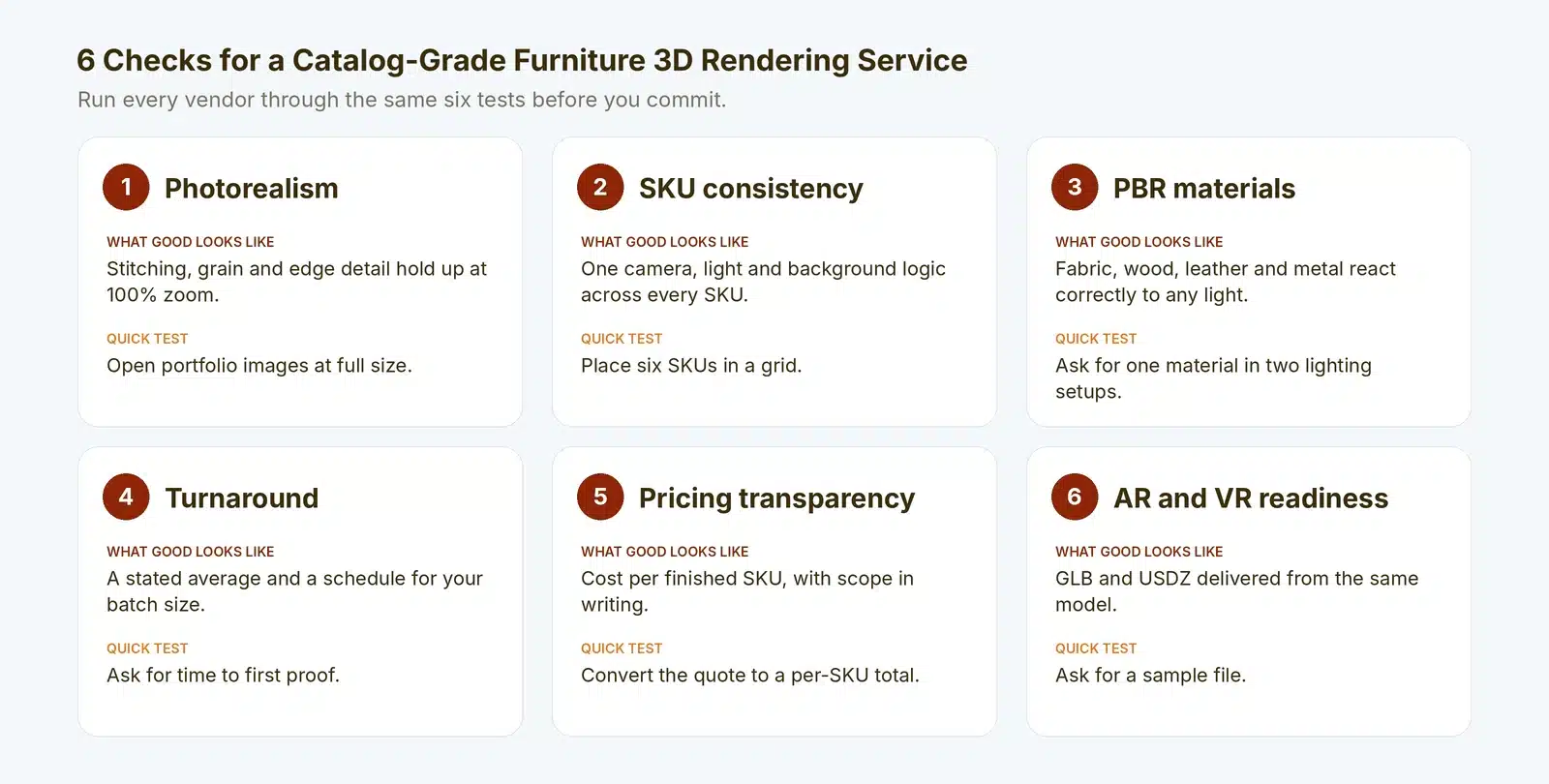
1. Photorealism
Photorealism in furniture is decided by small things: stitching and piping on upholstery, wood grain that follows the form, beveled edges that catch light, and soft contact shadows under legs. Fabric is the hardest to get right, so judge a studio on its upholstery work first.
Test it: Open portfolio images at 100%, and ask for samples close to your product type, whether that is upholstery, case goods or outdoor furniture.
2. SKU consistency
A catalog should look like one shoot. Camera height, crop, background tone, shadow softness and white balance should match from the first SKU to the two hundredth, even when different artists work on them months apart. This comes from a locked lighting and camera setup, not from luck.
Test it: Put six SKUs from one client project in a grid. If the tiles look different, the studio has no system.
3. PBR materials
PBR stands for physically based rendering. Materials are built from measured properties such as roughness, reflectivity and bump, so a fabric looks right in a white-background shot, a lifestyle scene and an AR viewer. Materials that are painted to look good in one render fall apart in the next.
Test it: Ask whether materials are built from your swatches and finish samples, and whether you receive the material set along with the images.
4. Turnaround
A quoted turnaround only helps if it is specific. Speed on one piece and speed on a 100-SKU batch are different numbers. Ask for time to first proof, time per revision round, and a delivery schedule for your batch size.
Test it: Ask for the average turnaround and how it changes at your volume. At 4DVIZ our average is 72 hours, and larger batches get a schedule in the quote.
5. Pricing transparency
Turn every quote into a cost per finished SKU. Find out whether modeling is included, how many angles the price covers, what a new fabric on an existing model costs, and what counts as an out-of-scope revision. A low headline price with modeling, extra angles and revisions added later is the most common budget surprise.
Test it: Ask for an all-in price per SKU for your exact scope, in writing.
6. AR and VR asset readiness
Even if you only need still images today, the 3D model is the asset that lasts. AR-ready furniture needs clean geometry, light textures, correct real-world scale and PBR materials that export well. The common delivery formats are GLB for web and Android viewers and USDZ for Apple devices. Our guide to optimizing furniture models covers the technical side.
Test it: Ask for a sample GLB or USDZ from a model used in a catalog render, and ask what it costs to add.
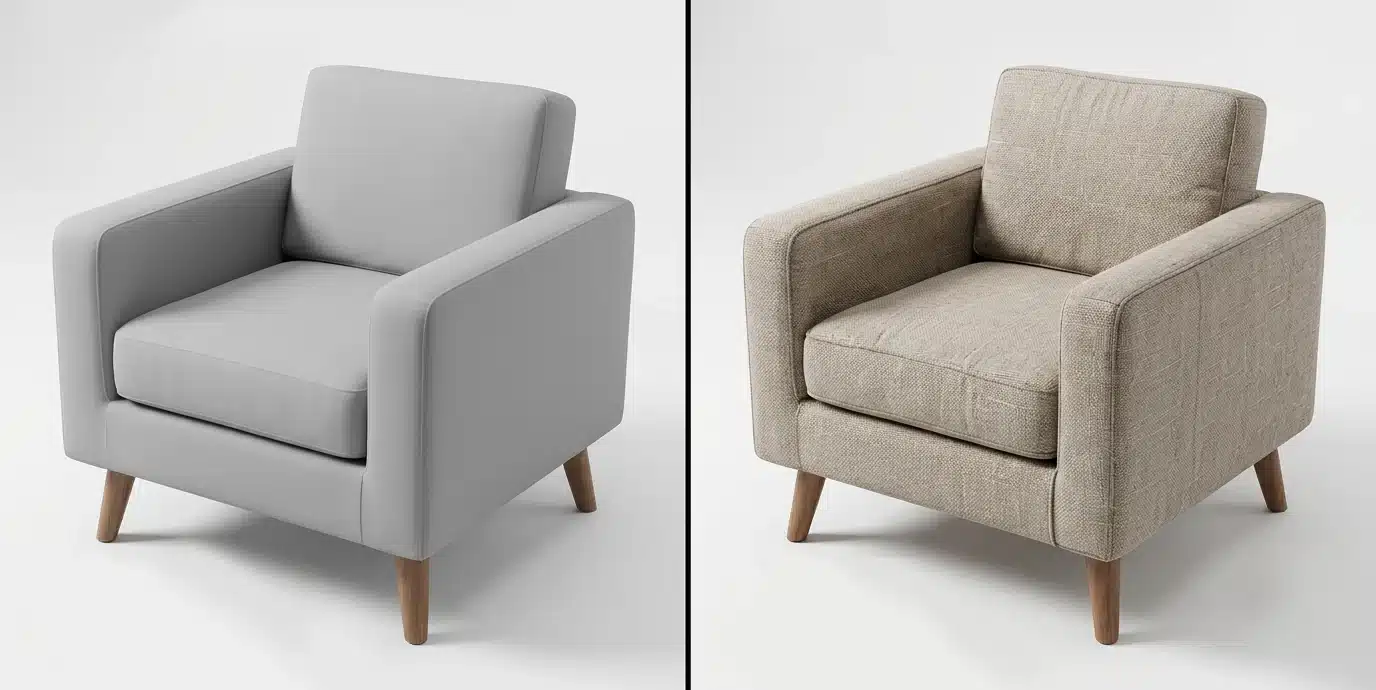
Side-by-side sample renders: what to compare
When vendors send samples, place them next to each other at the same size and check the details that are hardest to fake.
| Detail | Strong render | Weak render |
|---|---|---|
| Upholstery | Visible stitching, believable weave, soft cushion sag | Smooth plastic look, hard edges |
| Wood | Grain follows the form, variation between boards | Repeating texture, grain running the wrong way on corners |
| Metal and glass | Reflections show a believable environment | Flat gray shine or blown-out highlights |
| Shadows | Soft contact shadow that grounds the piece | Floating look or hard cut-out shadow |
| Scale | Proportions match real dimensions in a room | Oversized or undersized pieces next to props |
| Catalog grid | Six SKUs look like one shoot | Each tile has different light and crop |
Furniture 3D rendering pricing scenarios
Compare studios on cost per finished SKU. The examples below use 4DVIZ’s published rate of $75 per piece for a standard furniture render, which covers modeling through the final image. Check the current figure on our price list. Lifestyle scenes are scoped and quoted separately.
| Scenario | Scope | Cost | Ask every vendor |
|---|---|---|---|
| Collection launch | 25 SKUs, standard product renders | 25 x $75 = $1,875 | Is modeling included in this number? |
| Full catalog | 120 SKUs, standard product renders | 120 x $75 = $9,000 before any volume pricing | Is there package pricing at this volume? |
| Variant-heavy range | 30 sofas in 4 fabrics, 120 finished images | Depends on whether extra fabrics are priced as new models or as variants of one model | What does a recolor of an existing model cost compared with a new one? |
Two habits lower the cost with any studio. Send complete specs so the first proof lands close, and ask for variants to be priced from the master model instead of from scratch. For cost ranges by render type, see our 3D product rendering guide.
When 4DVIZ is the right fit
4DVIZ is a 3D visualization studio founded in 2019, with 500+ projects across furniture and product rendering, architectural visualization, 3D modeling and AR-ready assets. We work remotely with furniture brands, ecommerce sellers and retailers in the USA, UK, Canada, Europe and Australia. We are the right fit when you need:
- Catalog-scale production. We handle bulk collections and full catalogs, with colorways and finishes generated from the same model.
- Upfront pricing. Rates are published on our price list, so you can budget before you send a brief.
- Fast turnaround. Our average is 72 hours across projects, and larger batches get a delivery schedule in the quote.
- Founder-led quality control. Our Founder reviews quality on every project before delivery.
- One consistent pipeline. Modeling, materials and rendering run through 3ds Max, V-Ray or Corona, and Photoshop, so the look stays the same from SKU to SKU.
- Assets that go beyond stills. The same model can become an AR-ready GLB, a 360 spin or the basis for a 3D product configurator.
- Low-risk starts. Standard revisions are included, and every project has a 30-day money-back guarantee.
If you already run a hosted configurator or viewer platform, we build the 3D assets it needs. Full scope and process are on our furniture 3D rendering services page, and the 10-step furniture rendering guide shows what happens after you hire us.
Next steps for online retailers
Prepare your product specs
Send every vendor the same pack for each test SKU:
- CAD files, drawings or an existing 3D model
- Exact dimensions, including seat height, depth and leg or base details
- Material and finish list with fabric swatch codes and wood finishes
- Photos of the real product from front, side, back and close-up details
- Intended use (ecommerce listing, print catalog, marketplace or AR) and image specs (background, aspect ratio, resolution, number of angles)
- Two or three reference images of the look you want
Request test renders
Choose three SKUs that stress different skills: one simple piece, one upholstered or complex piece, and one that comes in several finishes. Send the same pack and brief to two or three vendors. If a vendor charges for tests, pay for them, and ask whether the fee is credited to the full project. Identical briefs are the only way to make the comparison fair.
Evaluate the proofs across vendors
Score each vendor from 1 to 5 and adjust the weights to your priorities.
| Criterion | Suggested weight | Vendor A | Vendor B | Vendor C |
|---|---|---|---|---|
| Photorealism | 25% | |||
| SKU consistency | 20% | |||
| PBR materials | 15% | |||
| Turnaround | 15% | |||
| Pricing transparency | 15% | |||
| AR and VR readiness | 10% |
While scoring, view every image at 100%, hold each render next to the physical sample, place the three test images in one grid, and note how fast the first proof and each revision came back.
Make the call
Pick the vendor with the best total score, then confirm in writing the all-in price per SKU, the delivery schedule for the full batch, revision scope, file formats and who owns the final 3D models.
FAQ
What is the best furniture 3D rendering service for ecommerce? The best service is the one that scores highest on your own test render. Compare furniture samples, catalog consistency, turnaround and all-in cost per SKU instead of headline prices.
How much does furniture 3D rendering cost? Cost depends on model complexity, number of angles, scene type and volume. At 4DVIZ a standard furniture render is $75 per piece, and lifestyle scenes are quoted separately. Always convert quotes to cost per finished SKU.
How long does furniture 3D rendering take? Our average turnaround is 72 hours across projects. Timelines depend on product complexity and how complete your specs are, and larger catalogs are delivered on a batch schedule.
What files should I expect from a furniture rendering studio? High-resolution JPG or PNG for images, with transparent PNG if you composite your own backgrounds. For AR and web viewers, ask for GLB and USDZ delivered from the same model.
Should I pay for a test render? For a large catalog, yes. A small paid test with an identical brief across vendors is the cheapest way to avoid a costly mismatch.
Can the same 3D model be used for AR and 360 views? Yes, if it is built with clean geometry, correct scale and PBR materials. Ask your studio to deliver the optimized model from the same source used for your catalog renders.