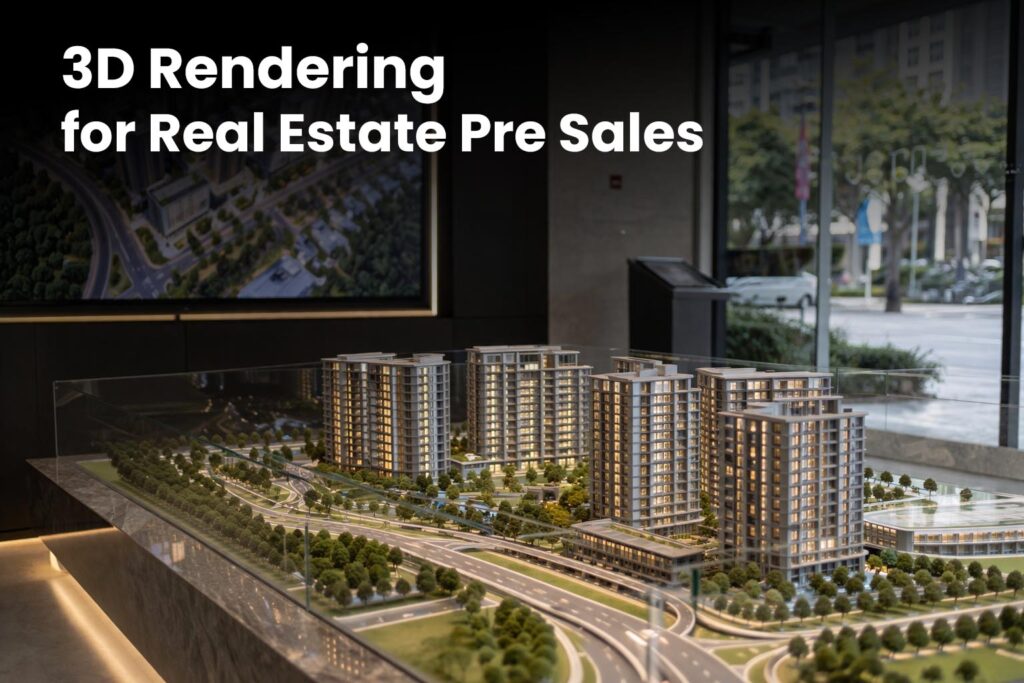
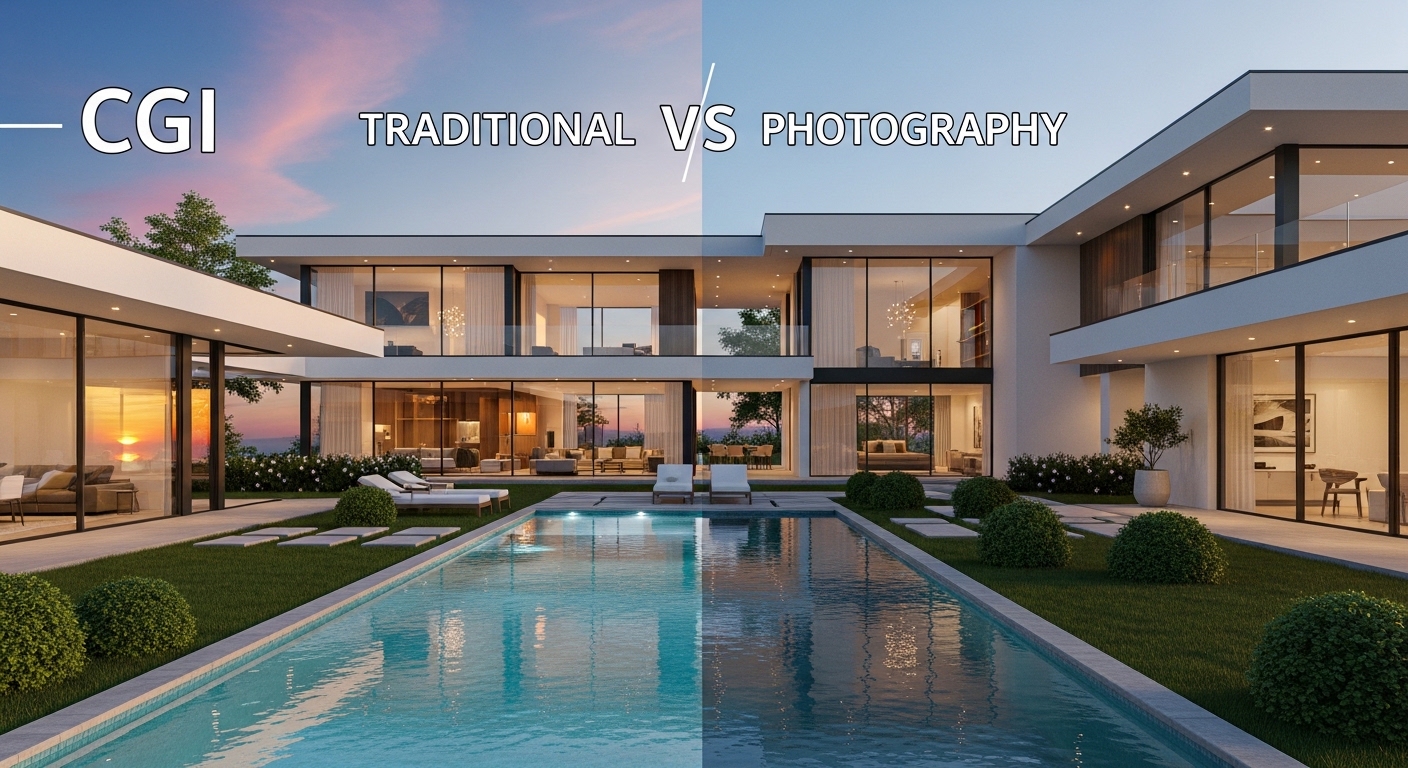
In today’s competitive real estate market, strong visuals are no longer optional — they are central to how properties are marketed and sold. Developers and agencies often face a key decision: should they rely on traditional property photography, or invest in CGI rendering to showcase their projects? Both approaches offer distinct advantages, but they serve different stages of a development. Understanding the difference between CGI and photography can help you choose the right visual strategy for pre-sales, luxury launches, and completed property listings.
What Is CGI in Real Estate Marketing?
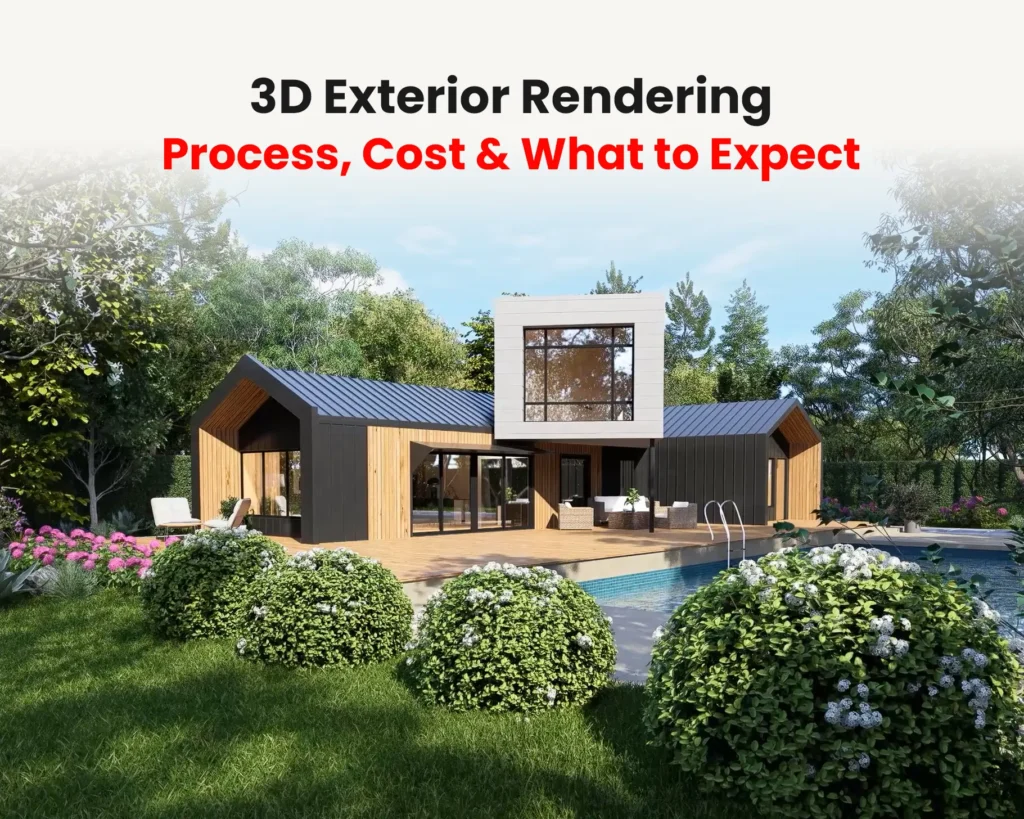
CGI (Computer-Generated Imagery) is a digitally created, photorealistic visualization of a property that may not yet exist in physical form.
It allows developers to market:
- Off-plan apartments
- Pre-construction villas
- Commercial buildings
- Mixed-use developments
The key advantage of CGI is simple:
- You can begin marketing before construction is complete.
- High-quality architectural rendering allows buyers and investors to visualize a finished project long before it is built.
What Is Traditional Property Photography?
Traditional real estate photography captures actual, completed spaces using professional cameras, lighting setups, and interior staging.
It is commonly used for:
- Completed residential listings
- Commercial property marketing
- Rental platforms
- Sales brochures
Photography requires physical access to the property. It cannot be used before construction finishes.
CGI vs Photography: Side-by-Side Comparison
| Factor | CGI Rendering | Traditional Photography |
| Requires Completed Property | No | Yes |
| Pre-Sales Marketing | Yes | No |
| Creative Flexibility | Full control over materials & lighting | Limited to existing space |
| Weather Dependency | None | Affected by weather & natural light |
| Revision Flexibility | Digital adjustments possible | Requires reshooting |
| Best For | Off-plan & luxury launches | Completed property listings |
The biggest difference is timing.
Photography starts when construction ends.
CGI starts when design begins.
When Developers Should Use CGI
CGI is ideal for:
- Off-plan property sales
- Investor presentations
- Planning submissions
- Luxury development launches
- Multi-phase residential projects
In competitive markets, waiting until completion to begin marketing can delay revenue generation.
CGI allows developers to:
- Launch marketing campaigns early
- Secure pre-sales
- Test multiple design variations
- Present different interior styles
- Visualize landscaping and surroundings
For pre-construction marketing, CGI is often essential.
When Photography Works Best
Photography performs best when:
- Construction is fully complete
- Interior staging is finalized
- The property is ready for listing
- Buyers expect authentic, real-world visuals
Completed properties benefit from real light, natural textures, and tangible atmosphere captured through photography.
For ready-to-move homes or commercial spaces, photography builds trust and transparency.
Cost Comparison CGI vs Traditional Photography
There is no universal “cheaper” option.
CGI requires modeling, scene setup, lighting, and rendering production.
Photography requires:
- On-site crew
- Travel expenses
- Staging costs
- Equipment setup
- Weather-dependent scheduling
For large-scale developments, CGI can become more scalable since updates and revisions do not require a new shoot.
Buyer Psychology: Does CGI Build Trust?
- A common concern is whether buyers trust CGI.
- The answer depends on quality.
- High-quality, photorealistic rendering can be nearly indistinguishable from photography.
- Poor-quality CGI, however, can reduce credibility.
- Execution matters more than the method.
The Hybrid Strategy Most Developers Use
Today, many real estate developers use both tools strategically:
- CGI during pre-construction and pre-sales
- Photography after project completion
This approach ensures continuous marketing coverage throughout the entire project lifecycle.
CGI vs Photography Which Is Better?
There is no single winner.
Use CGI when:
- The property is not yet built
- You need flexibility in design presentation
- Pre-sales and investor marketing are priorities
Use Photography when:
- The property is completed
- You want to show real, finished environments
- Immediate listing is required
For developers aiming to accelerate early sales, CGI provides a clear strategic advantage.
For finished listings, photography remains essential.
Frequently Asked Questions
Q. Is CGI as realistic as photography?
Yes — when produced professionally. High-end CGI can closely replicate real-world lighting, materials, and textures.
Q. Is CGI more expensive than photography?
Costs vary depending on project scope. CGI avoids staging and travel costs but involves modeling and rendering time.
Q. Can CGI completely replace photography?
Not entirely. Most large developments benefit from using both at different stages.
Q. Is CGI effective for luxury real estate?
Yes. Luxury projects often use photorealistic CGI to create aspirational marketing visuals before construction is complete.
CGI and traditional photography are not competitors — they are tools designed for different phases of How Photorealistic Rendering Helps Real Estate Sales marketing.
Understanding when to use each allows developers to:
- Launch faster
- Communicate more clearly
- Reduce marketing delays
- Improve investor presentations
- Strengthen overall campaign performance
The right visual strategy depends on timing, project scale, and marketing objectives.