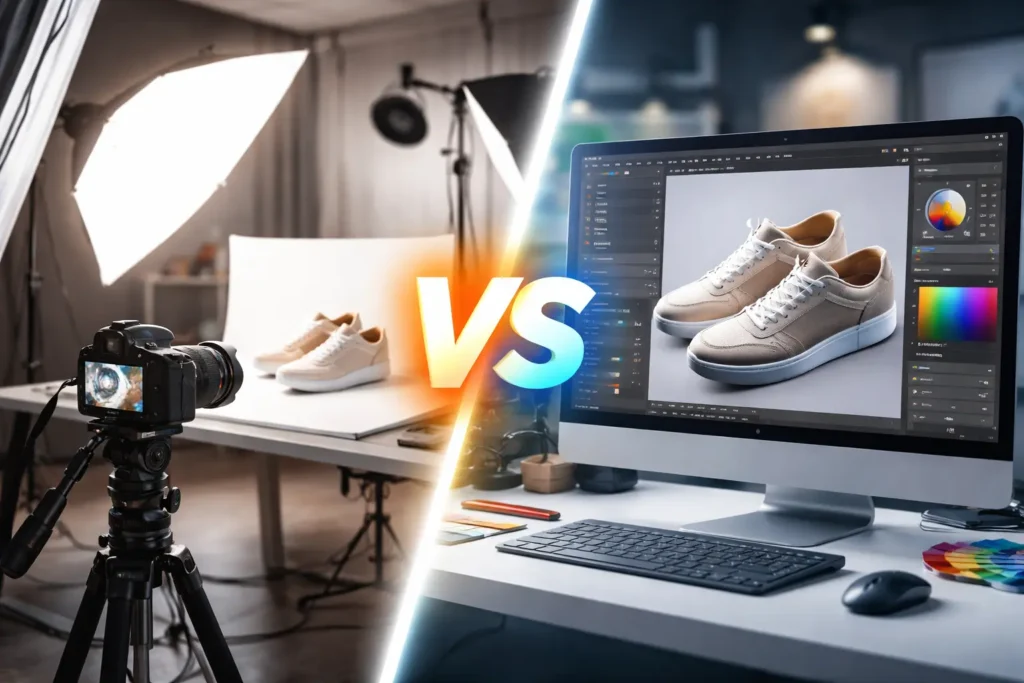
In today’s visual-first digital landscape, photorealistic rendering has become a powerful tool for brands, designers, and marketers. From product showcases to architectural visualization, the ability to create images that look indistinguishable from real-life photography is no longer optional—it’s a competitive advantage.
But what actually makes photorealistic rendering services look real?
It’s not just about high-quality models or expensive software. True realism is achieved through a combination of technical precision, artistic understanding, and attention to detail. In this article, we’ll break down the key factors that define high-end photorealistic rendering and why they matter for your business.
1. Accurate Lighting and Global Illumination

Lighting is the single most important factor in achieving realism.
In real life, light behaves in complex ways—it reflects, refracts, diffuses, and casts subtle shadows. High-quality rendering engines simulate this behavior using global illumination, which mimics how light bounces off surfaces.
Why it matters:
- Creates natural shadows and highlights
- Enhances depth and realism
- Eliminates the “CGI look”
Without proper lighting, even the most detailed 3D model will look flat and artificial.
2. High-Quality Materials and Textures
A surface is never just a color.
In photorealistic rendering, materials are defined using PBR (Physically Based Rendering) workflows. This means every surface reacts to light based on real-world physics.
Key texture maps include:
- Diffuse (base color)
- Roughness (surface smoothness)
- Normal (fine surface details)
- Reflection and specular maps
Why it matters:
- Adds micro-details like scratches, dust, fingerprints
- Defines how surfaces interact with light
- Prevents overly perfect, unrealistic finishes
3. Real-World Scale and Proportions
Even a perfectly rendered object can feel “off” if the proportions aren’t accurate.
Professional photorealistic rendering services always maintain real-world measurements and scale consistency. This ensures objects behave naturally in lighting, perspective, and composition.
Why it matters:
- Ensures believable perspective
- Improves product accuracy
- Builds trust with viewers
This is especially critical in product rendering services, where even small inaccuracies can impact buyer confidence.
4. Imperfections and Natural Details
Ironically, perfection kills realism.
Real-world objects are never flawless. They have tiny imperfections—dust, scratches, uneven edges, subtle wear. Adding these details is what separates amateur renders from professional ones.
Examples:
- Slight smudges on glass
- Fabric wrinkles
- Minor surface inconsistencies
- Edge wear on products
Why it matters:
- Adds authenticity
- Breaks the “too clean” CG look
- Makes images relatable and believable
5. Advanced Camera Settings and Composition
Photorealistic rendering isn’t just about 3D—it’s also about photography principles.
Professional artists replicate real camera behavior using:
- Depth of field
- Motion blur
- Lens distortion
- Exposure and white balance
Why it matters:
- Mimics real-world photography
- Guides viewer attention
- Enhances storytelling
A well-composed render feels like it was captured with a professional camera—not generated on a computer.
6. Realistic Environment and Context

Objects don’t exist in isolation.
Placing a product or design in a believable environment significantly enhances realism. This includes:
- Natural backgrounds
- Studio setups
- Lifestyle scenes
Why it matters:
- Adds context and scale
- Improves emotional connection
- Makes visuals more engaging
For example, a chair rendered in a realistic living room feels far more believable than one floating on a blank background.
7. High Polygon Modeling and Detail Accuracy
Geometry plays a crucial role in realism.
Low-quality models often have:
- Sharp edges where there should be curves
- Simplified shapes
- Missing fine details
Professional photorealistic rendering services use high-polygon models or optimized subdivision techniques to ensure smooth, accurate geometry.
Why it matters:
- Improves silhouette quality
- Enhances close-up renders
- Supports realistic lighting interaction
8. Post-Processing and Color Grading
Rendering doesn’t end when the image is exported.
Post-production is where final realism is refined using tools like Adobe Photoshop or compositing software.
Techniques include:
- Color correction
- Contrast and exposure adjustments
- Adding grain or noise
- Bloom and glare effects
Why it matters:
- Matches real camera output
- Enhances mood and tone
- Polishes the final image
9. Physically Accurate Rendering Engines
The choice of rendering engine also affects realism.
Modern engines like:
- V-Ray
- Corona Renderer
- Unreal Engine
- Blender Cycles
…use physically accurate algorithms to simulate real-world lighting and materials.
Why it matters:
- Produces consistent, realistic results
- Supports advanced lighting calculations
- Enables faster iterations without sacrificing quality
10. Artistic Direction and Human Expertise
Technology alone isn’t enough.
Even with the best tools, achieving photorealism requires a skilled artist who understands:
- Light behavior
- Composition
- Material realism
- Visual storytelling
Why it matters:
- Balances technical and creative elements
- Avoids over-processing
- Delivers visually compelling results
This is where experienced 3D rendering studios stand out—they combine technical workflows with artistic judgment.
Why Photorealistic Rendering Matters for Brands
Photorealistic rendering is more than just visual appeal—it directly impacts business outcomes.
Key benefits:
- Higher conversion rates in eCommerce
- Reduced need for physical prototypes
- Faster product launches
- Consistent branding across platforms
For industries like furniture, electronics, and real estate, high-quality rendering is now a core part of the marketing pipeline.
What This Means When Choosing a Rendering Partner
If you’ve ever seen a render and instantly felt it was “off,” it’s usually not because of one major flaw—it’s the accumulation of small misses. Slightly unrealistic lighting, overly clean surfaces, or materials that don’t react naturally can quickly break the illusion.
That’s why evaluating photorealistic rendering services shouldn’t be about surface-level quality alone. Look deeper. Pay attention to how light behaves, how materials feel, and whether the image holds up under closer inspection.
Because in the end, photorealism isn’t about making something look good—it’s about making it feel believable.
And that subtle difference is what separates average renders from visuals that actually influence decisions.