3D rendering for furniture eCommerce has become essential in today’s digital-first retail landscape, where customers expect more than static images and vague product descriptions—especially when buying big-ticket items like furniture. With online furniture sales rising fast, high-quality 3D furniture rendering gives brands a critical edge over competitors still relying on traditional photography.
At 4dviz Studio, we’ve worked with furniture retailers, DTC brands, and eCommerce startups to transform the way they showcase products online. This blog breaks down why photorealistic 3D rendering isn’t just a luxury—it’s a necessity for furniture eCommerce success.
Key Benefits of 3D Rendering for Furniture eCommerce
1. Improved Product Visualization
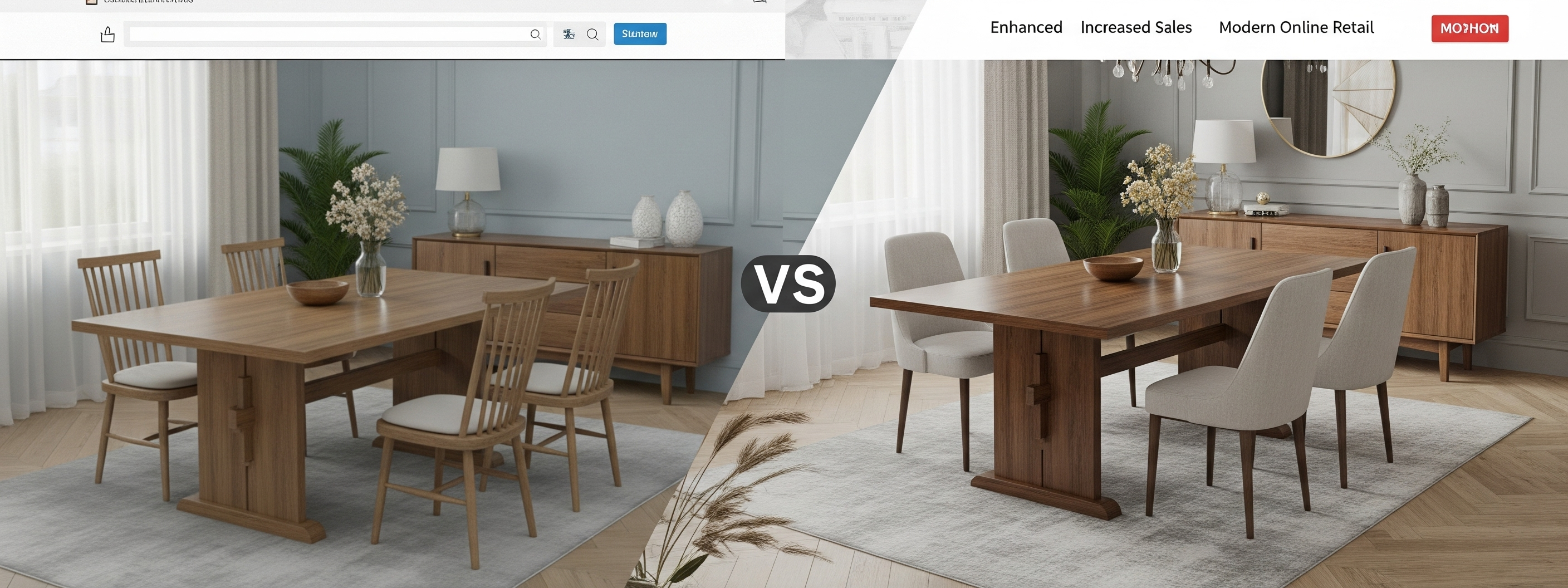
Buying furniture online comes with risk. Without being able to touch, feel, or try the product, customers rely entirely on what they see. A realistic 3D render gives buyers a full view of your product — from multiple angles, in different materials and colors, and in contextual environments like a living room, office, or patio.
This visual clarity builds trust and reduces post-purchase regret, one of the biggest drivers of eCommerce returns.
2. Increased Conversions and Lower Returns
Beautiful product renders don’t just make your site look better — they influence buying decisions. Clients working with 4dviz Studio have reported conversion rate increases of 30% or more after switching from traditional product photography to interactive, high-res 3D furniture renders.
3. Cost-Effective Compared to Traditional Photography
Traditional furniture photography means building prototypes, studio shoots, rented spaces, and new photos for every color or material variation. With 3D product rendering, there’s no need to build physical products, textures and colors can be swapped digitally, and overhead drops sharply after the first model is built — especially valuable if you run a large catalog or many SKU configurations.
4. Easily Showcase Customization Options
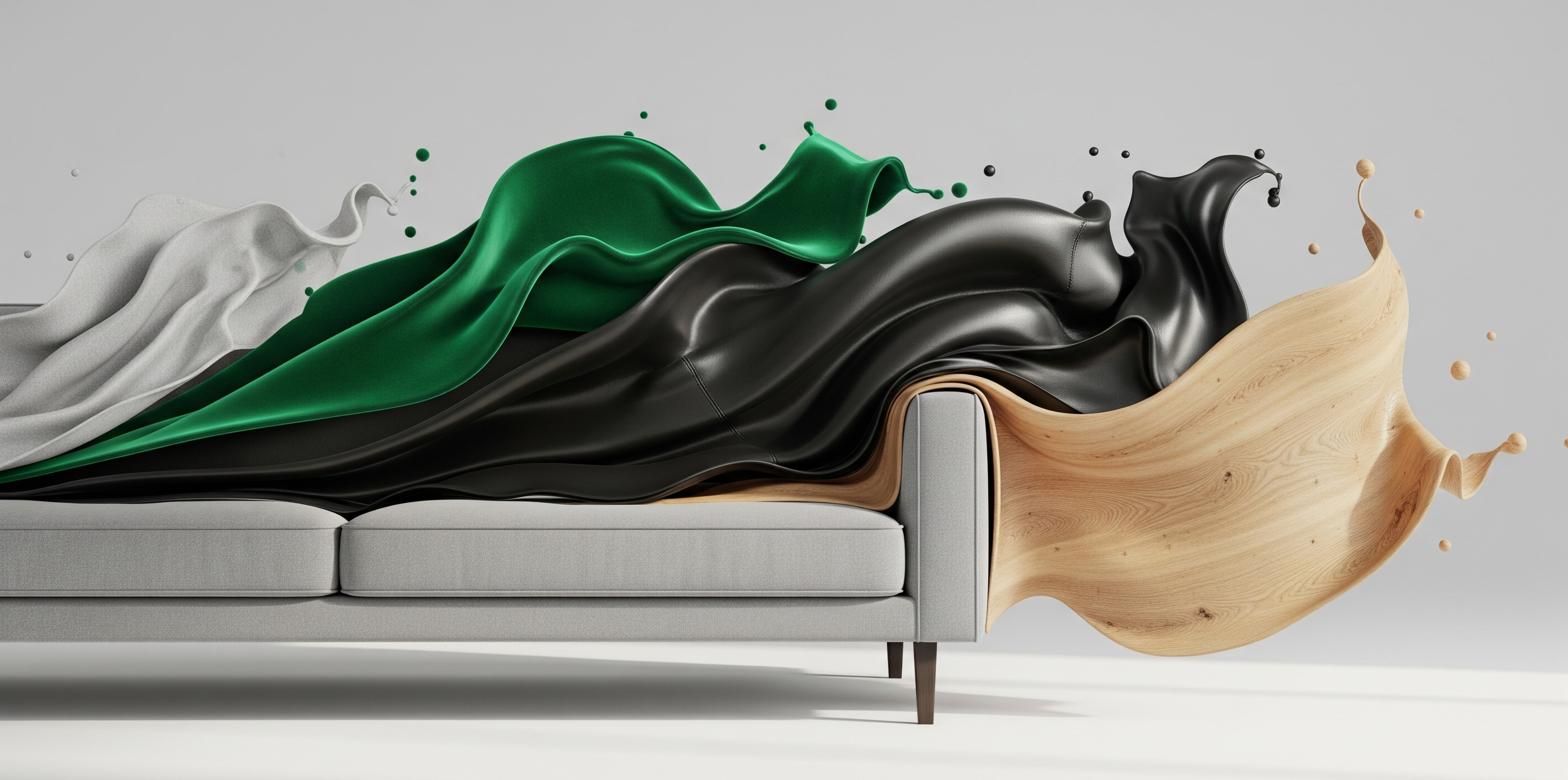
Furniture buyers love options — different fabrics, woods, sizes, finishes — but photographing every combination is nearly impossible. With 3D furniture rendering, you can build a dynamic product configurator letting customers switch materials in real time, view different lighting setups, and zoom into textures and finishes.
5. Accelerate Time to Market
Have a new collection in development with no prototypes ready for photography? You can start marketing before the product physically exists. Working from CAD files, sketches, or mood boards, we create production-ready renders — ideal for pre-order campaigns, catalog launches, trade shows, and B2B pitches.
6. Seamless Integration with AR and VR
3D models integrate directly into AR and VR experiences — letting shoppers “place” furniture in their own room, tour virtual showrooms, or spin products 360°. These features increase time on site and reduce decision friction. A sofa isn’t just a sofa anymore — it’s a click-and-place, view-in-room experience.
7. Consistency Across All Channels
Renders give you a consistent look across listings, catalogs, ads, and social — no lighting or background variance like photography. Need the same product in a kitchen, living room, and office setting? We generate each in the same visual style for omni-channel consistency, including lifestyle scenes tailored to each platform.
8. Stay Competitive in a Crowded Market
The furniture market is booming, but also competitive. Big names like IKEA, Wayfair, and Article are already leveraging 3D rendering and AR technologies to gain an edge.
If you’re still relying on low-quality images or inconsistent product shots, you’re likely to fall behind. Investing in professional 3D rendering positions your brand as modern, trustworthy, and quality-driven—qualities that matter immensely to online shoppers.
Choosing and Working with a 3D Rendering Studio for Furniture eCommerce
Not every furniture product benefits from 3D rendering in the same way, and knowing where it delivers the most value helps you brief a studio correctly and get better results faster.
Upholstered furniture — sofas, armchairs, dining chairs — relies heavily on how fabric and leather catch light. A skilled studio simulates fabric weave, stitching, tufting, and the way cushions compress under natural light, so the render doesn’t look flat or “plastic.” This is one of the harder categories to get right, so ask to see upholstery-specific examples in a studio’s portfolio before committing.
Case goods — tables, cabinets, shelving, bed frames — depend on accurate wood grain, joinery detail, and finish (matte, satin, high-gloss). Buyers researching case goods online tend to zoom in on corners and joints, so precision here directly affects trust.
Outdoor furniture needs materials that read as weather-resistant — teak, rattan, powder-coated metal, weatherproof fabric — under natural daylight conditions rather than studio lighting, since that’s the context buyers picture it in.
Modular and configurable furniture is where 3D rendering solves a problem photography genuinely can’t: a sectional sofa with 12 fabric options and 6 configurations would require dozens of physical photoshoots. With one accurate 3D model, every combination can be generated digitally, cutting both cost and turnaround dramatically.
Once you know where 3D rendering fits your catalog, the next step is choosing the right studio. A few things worth checking before you commit:
- Portfolio depth in your specific category — a studio strong in architectural visualization isn’t automatically strong in fabric or wood detail. Ask for furniture-specific examples close to your product type.
- A clear revision policy — how many rounds are included, and what counts as a revision versus a new request.
- Realistic turnaround times — single products typically take a few days; full catalogs need proper scoping, and any studio promising unrealistic speed on a large catalog is a red flag.
- File compatibility — can they work directly from your CAD files (FBX, OBJ, 3DS), sketches, or reference photos without forcing you into a specific format.
At 4dviz Studio, this is exactly how we approach furniture eCommerce projects. We start with whatever you already have — CAD files, sketches, or product photos — and build an accurate 3D model from there. We apply true-to-life materials matched to your product’s actual finish, then light the scene to fit your brand’s visual style, whether that’s a clean white-background catalog shot or a fully styled lifestyle scene.
The real advantage is reusability: once your model is built, it isn’t a single-use asset. The same file can generate your catalog shots, lifestyle scenes, AR-ready formats, and every color or fabric variant you need — without rebuilding from scratch or booking a new studio session each time your catalog grows.
Common Questions About 3D Rendering for Furniture eCommerce
Is 3D rendering better than product photography for furniture eCommerce?
For most catalogs, yes — it’s more flexible and cost-effective, and it allows unlimited color or material variations without reshoots.
Can 3D renders be used for AR “view in room” features?
Yes — the same 3D model built for your renders can be exported for AR platforms, letting shoppers place furniture in their own space before buying.
How long does a furniture eCommerce rendering project take?
Most single-product projects take 3–5 days; full catalogs are scoped based on SKU count and configuration complexity.
Do I need to provide a physical prototype for 3D rendering?
No — we can build accurate models from CAD files, sketches, or reference photos, so rendering can start before a physical sample exists.
Final Thoughts: It’s Not Just a Render, It’s a Sales Tool
Product images are your first salesperson. Poor visuals lead to lost trust and abandoned carts — great visuals lead to confident purchases and brand loyalty. High-quality 3D furniture rendering is no longer optional for furniture eCommerce brands; it pays for itself through faster sales cycles, better customer experience, and higher marketing ROI.