
Choosing the right 3D architectural rendering partner is a critical business decision for architects, developers, and real estate marketers. High-quality renderings influence investor confidence, planning approvals, sales velocity, and brand perception. Poor vendor selection, on the other hand, often leads to delays, miscommunication, budget overruns, and visuals that fail to represent the design intent accurately.
This guide on How to Compare 3D Architectural Rendering Vendors provides a clear, professional framework for comparing service providers and making informed decisions. Instead of relying on aesthetics alone, it focuses on quality standards, workflows, scalability, and long-term collaboration value—key factors that truly differentiate vendors.
Why Vendor Comparison Is Essential in Architectural Visualization
The global visualization market has expanded rapidly, offering a wide range of studios, freelancers, and offshore teams. While this creates flexibility, it also makes architectural rendering vendors comparison more complex than ever.
Not all providers deliver the same level of architectural understanding, production discipline, or consistency. Some excel at marketing visuals but struggle with technical accuracy, while others prioritize precision but lack storytelling ability. A structured comparison process helps align expectations early and minimizes risk.
Professionals who compare vendors carefully gain better control over timelines, costs, and final output quality.
Visual Quality: Looking Beyond First Impressions
A strong portfolio is important, but visual quality should be evaluated with a critical eye. True quality lies in consistency, realism, and architectural logic rather than dramatic lighting or heavy post-processing.
Well-established best 3D architectural rendering companies demonstrate a balance between artistic presentation and technical correctness. Their work respects scale, proportion, and real-world material behavior while supporting the architectural narrative.
Core Quality Indicators
- Accurate lighting conditions that reflect real-world sun paths and interior illumination
- Material realism aligned with actual construction finishes and specifications
- Clean geometry and modeling precision without visual distortions
These indicators reveal whether a vendor understands architecture as a discipline, not just visualization as an art form.
Industry Experience and Specialization
Rendering requirements vary significantly across industries. Real estate developers prioritize emotional appeal and buyer engagement, while architects focus on design accuracy and clarity. Vendors with relevant experience understand these distinctions and adapt their approach accordingly.
Experienced architectural visualization service providers are able to interpret architectural drawings, BIM data, and design intent efficiently. This reduces briefing time, minimizes revisions, and ensures visuals align with project goals from the start.
When comparing vendors, review whether their portfolio reflects projects similar in scale, purpose, and complexity to your own.
Workflow Transparency and Communication Standards
Professional rendering outcomes depend as much on process as on talent. Clear workflows ensure predictable results and smoother collaboration.
Reliable 3D rendering studios for architecture operate with structured pipelines that define briefing requirements, feedback cycles, revision limits, and delivery milestones. This operational maturity becomes especially important on time-sensitive or multi-stakeholder projects.
Vendors who struggle to explain their workflow clearly often encounter issues during production.
Outsourcing vs Internal Production
Many firms choose to outsource architectural 3D rendering to gain flexibility, reduce overhead, and access specialized expertise. Outsourcing allows organizations to scale production according to project demand without long-term staffing commitments.
However, outsourcing success depends on selecting partners who operate as extensions of your team rather than isolated suppliers. The right vendor integrates seamlessly into your workflow and maintains consistent quality across projects.
Freelance vs Studio: Understanding the Difference
A common decision point is choosing between individual freelancers and established studios. While both options have advantages, they serve different project needs.
Freelance Architectural Renderer vs Studio (Comparison Table)
| Evaluation Criteria | Freelance Renderer | Professional Studio |
| Team Size | Single professional | Multi-disciplinary team |
| Scalability | Limited | High |
| Timeline Reliability | Availability dependent | Structured scheduling |
| Quality Consistency | Varies | Standardized review process |
| Project Management | Informal | Dedicated coordination |
| Ideal Use Case | Small, short-term work | Ongoing or complex projects |
This comparison clarifies when a freelance architectural renderer vs studio approach is most appropriate.
Handling Large and Complex Developments
Not all vendors are equipped to manage complex developments involving multiple buildings, views, and delivery phases. Such projects require structured asset management, internal quality control, and coordinated production teams.
Large-scale architectural rendering vendors typically offer project managers, standardized visual guidelines, and scalable production pipelines. These capabilities ensure consistency across extensive developments and long-term projects.
Choosing an under-resourced vendor for a large project often leads to visual inconsistency and missed deadlines.

Pricing Models and Cost Evaluation
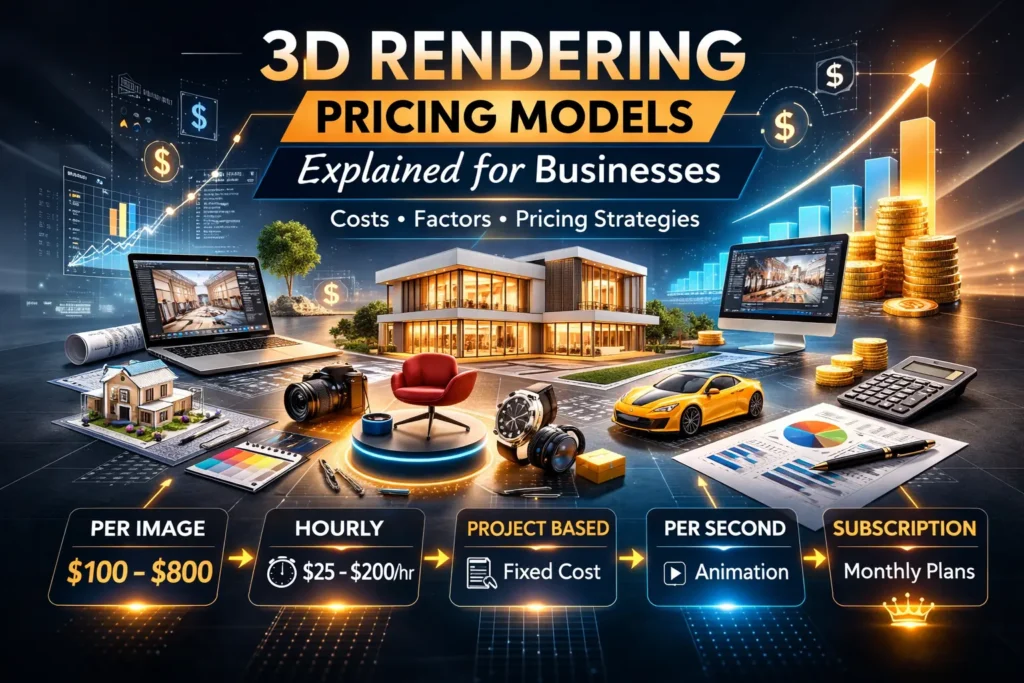
Rendering prices vary widely, influenced by project scope, realism level, turnaround time, and revision requirements. Instead of focusing solely on cost, professionals should evaluate overall value.
Transparent vendors clearly define deliverables, revision limits, usage rights, and payment terms. Vague pricing structures often result in unexpected costs later in the process.
Factors That Influence Pricing
- Level of detail and realism required
- Number of views and delivery formats
- Revision scope and feedback complexity
Understanding these variables allows fair comparison between proposals.
Identifying Risks Before They Become Problems
Vendor comparison is also about risk management. Certain warning signs consistently indicate potential issues during production.
Common red flags when hiring architectural rendering services include unclear contracts, unrealistic delivery promises, and inconsistent portfolio quality. Vendors unwilling to formalize scope or timelines often struggle with accountability.
Professional partners welcome scrutiny and provide clear documentation.
Confidentiality and Data Protection
Architectural visualization often involves sensitive information, including proprietary designs and unreleased developments. Responsible vendors treat data protection as a core obligation, not an optional feature.
Clear policies around NDA and data security for rendering vendors demonstrate professionalism and trustworthiness. Secure file handling, controlled access, and confidentiality agreements protect both parties and support long-term collaboration.
Geographic Location vs Operational Capability
While some clients prefer local vendors, modern collaboration tools enable effective partnerships across borders. The ability to communicate clearly, document changes, and meet deadlines matters more than physical proximity.
Many firms successfully work with international vendors who deliver high-quality results while offering cost advantages. The key is operational discipline, not location.
Final Evaluation Checklist
Before making a final selection, decision-makers should ensure the vendor demonstrates the following:
Bullet Point Section 3: Final Comparison Criteria
- Proven architectural understanding and consistent portfolio quality
- Transparent workflow, pricing, and revision policies
- Capacity to scale with project complexity and volume
This checklist helps transform vendor selection into a strategic, low-risk decision.
Conclusion
Comparing 3D architectural rendering vendors requires more than visual judgment. It demands a careful assessment of quality, process, scalability, and professionalism. By applying a structured evaluation framework, architects, developers, and marketers can select partners who deliver reliable results and long-term value.
A well-chosen rendering partner becomes an extension of your design and marketing team—supporting clearer communication, stronger presentations, and more successful projects.
For broader industry context on architectural representation and visualization standards, platforms such as ArchDaily regularly publish insights on how visual communication influences contemporary architectural practice.