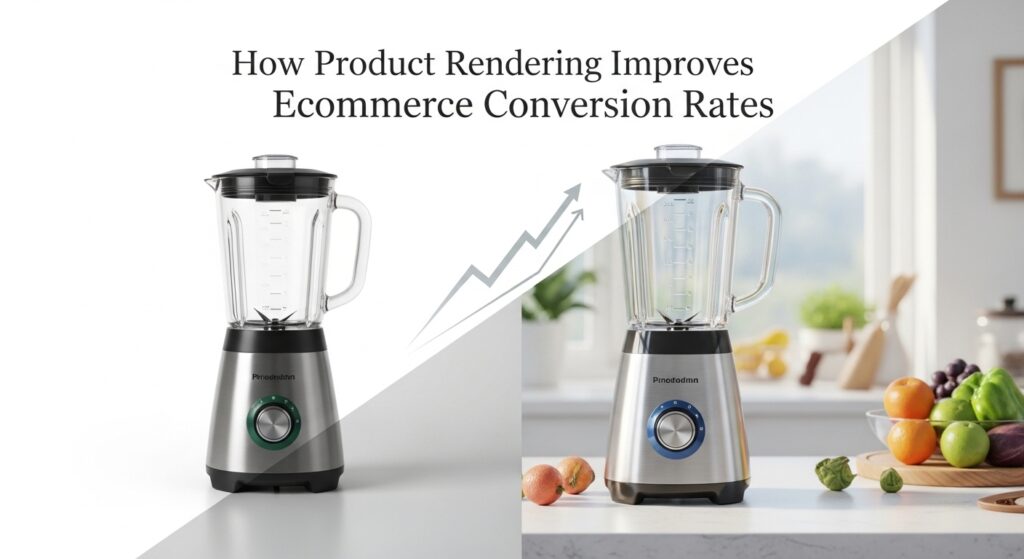
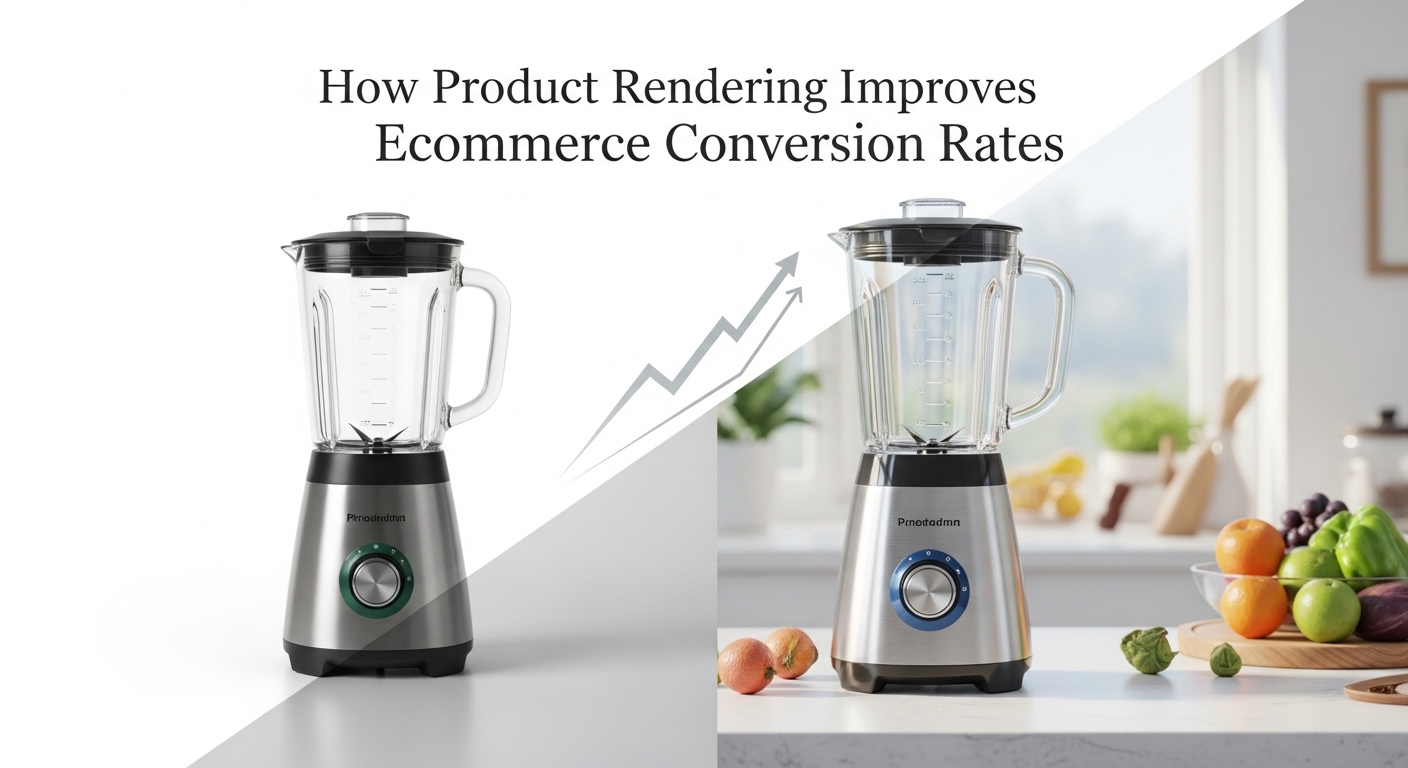
In today’s competitive ecommerce market, product visuals often determine whether a visitor becomes a customer. Online shoppers cannot physically touch or examine products, so images play a critical role in building trust and influencing buying decisions.
This is where product rendering has become increasingly important. Instead of relying solely on traditional product photography, many ecommerce brands now use 3D product rendering to create highly realistic visuals that showcase products from every angle.
When done correctly, product rendering not only improves visual presentation but can also significantly increase ecommerce conversion rates.
What Is Product Rendering?
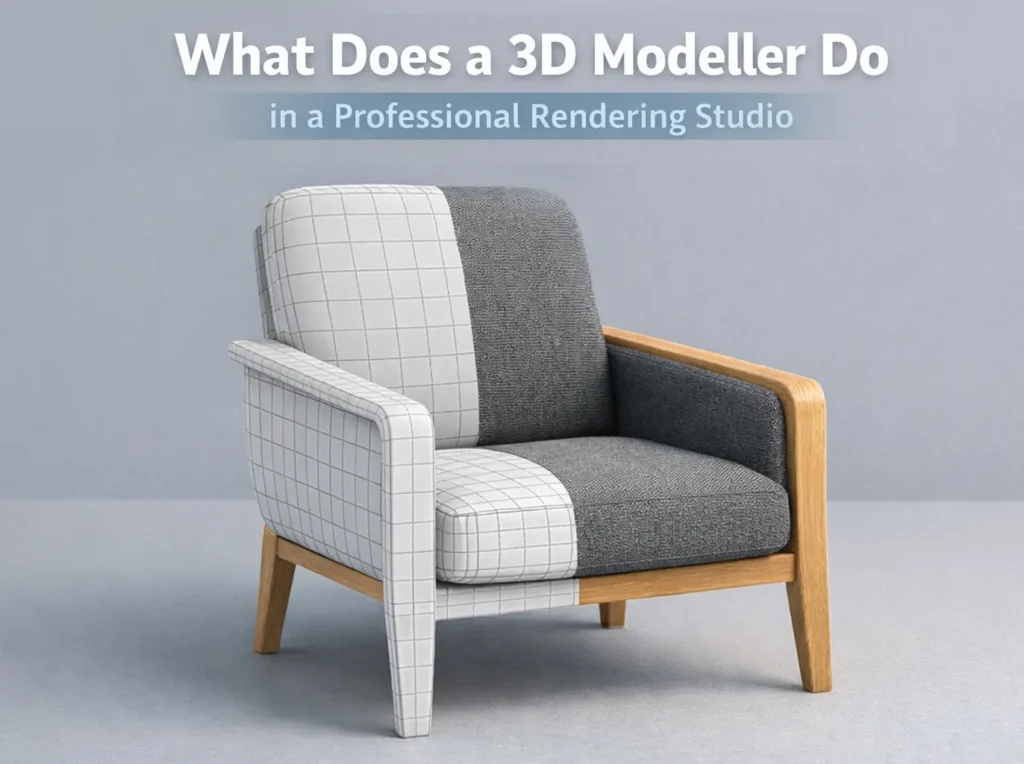
Product rendering is the process of creating photorealistic images of a product using 3D modeling and computer-generated imagery (CGI).
Instead of photographing a physical product, designers build a digital version that can be rendered into high-quality visuals.
Product rendering is commonly used for:
- Ecommerce product listings
- Online marketplaces such as Amazon
- Product launch campaigns
- Advertising and marketing visuals
- Social media content
Because the product exists digitally, brands can generate multiple images, angles, and environments without repeated photo shoots.
Why Product Visuals Matter in Ecommerce
Online shoppers rely heavily on visuals when deciding whether to purchase a product.
High-quality product images help customers:
- Understand product details
- Visualize how the product works
- Compare features and design
- Feel confident about purchasing
When visuals are clear and realistic, customers are more likely to trust the brand and proceed with the purchase.
Poor-quality images, on the other hand, often reduce buyer confidence and lead to lower conversion rates.
Key Ways Product Rendering Improves Conversion Rates
Several advantages make product rendering particularly effective for ecommerce businesses.
Consistent High-Quality Visuals
Traditional product photography can vary depending on lighting conditions, camera setup, and production environments.
3D product rendering ensures consistent visual quality across all product images. Lighting, angles, and textures can be precisely controlled, creating a polished and professional look.
Consistent visuals improve brand perception and make ecommerce stores appear more trustworthy.
Show Products From Multiple Angles
Online shoppers want to see products from every possible angle before making a purchase decision.
With 3D rendering, brands can easily generate:
- Front views
- Side views
- Close-up details
- 360-degree product views
This level of visual detail helps customers better understand the product, reducing uncertainty and increasing conversion potential.
Faster Product Launches
Traditional photography requires physical prototypes before marketing materials can be created.
Product rendering allows ecommerce brands to start marketing even before manufacturing begins.
This enables companies to:
- Launch pre-orders
- Test market interest
- Prepare product pages early
Earlier marketing often leads to faster product adoption and stronger launch performance.
Easy Product Variations
Many ecommerce products come in multiple variations such as colors, materials, or finishes.
With traditional photography, each variation requires a separate photo shoot.
With 3D rendering, variations can be generated digitally by simply changing textures or materials.
This makes it easier to display multiple product options while maintaining visual consistency.
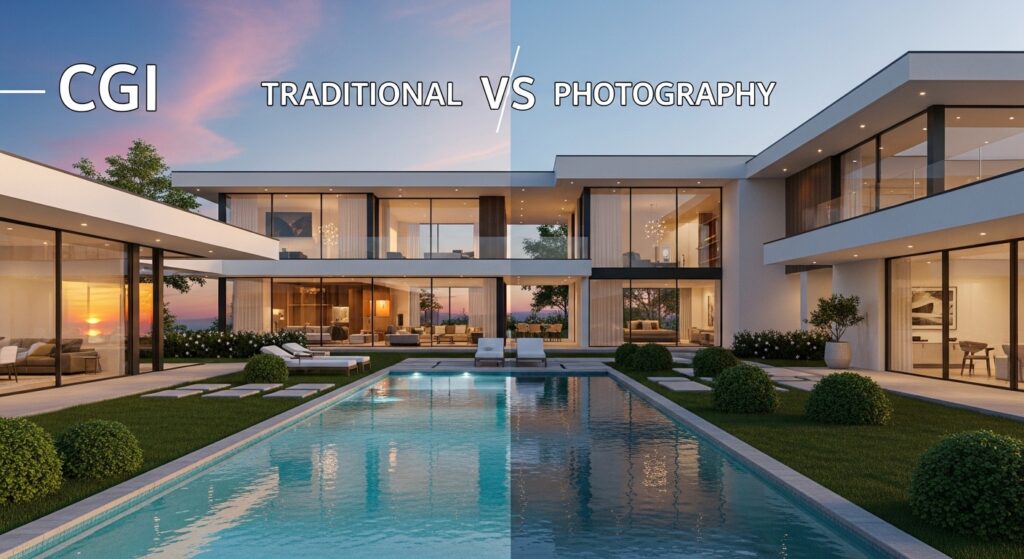
Product Rendering vs Traditional Product Photography
Both rendering and photography are useful, but they serve different needs.
| Feature | Product Rendering | Product Photography |
| Requires Physical Product | No | Yes |
| Visual Flexibility | High | Limited |
| Product Variations | Easy to generate | Requires multiple shoots |
| Cost Scalability | Scalable | Cost increases with shoots |
| Ideal Use | Ecommerce & product launches | Physical retail listings |
For many ecommerce brands, rendering provides greater flexibility and scalability.
How Product Rendering Enhances Ecommerce Marketing
Product rendering is widely used across ecommerce marketing channels.
Brands use rendered visuals for:
- Product pages
- Amazon listings
- Social media advertisements
- Website banners
- Email marketing campaigns
Since the images are created digitally, brands can easily adapt them for different marketing platforms and campaign formats.
Why Realistic Rendering Is Important
Not all 3D renderings are equally effective.
High-quality product rendering requires:
- Accurate 3D modeling
- Realistic materials and textures
- Professional lighting simulation
- Proper reflections and shadows
When these elements are executed correctly, rendered images can look nearly identical to professional photography.
This level of realism helps maintain buyer trust while still offering the flexibility of digital visualization.
Frequently Asked Questions
What is product rendering in ecommerce?
Product rendering is the creation of photorealistic product images using 3D modeling and CGI instead of traditional photography.
Is product rendering better than product photography?
For many ecommerce businesses, product rendering offers greater flexibility, especially for products that have multiple variations or are not yet manufactured.
Can product rendering improve online sales?
Yes. High-quality product visuals improve customer confidence and help shoppers understand product features, which can increase conversion rates.
Do ecommerce brands use CGI for product images?
Yes. Many modern ecommerce brands use CGI and 3D rendering to create product visuals for websites, marketplaces, and marketing campaigns.
Product rendering has become an essential tool for modern ecommerce businesses. By creating realistic product visuals without the need for physical photography, brands gain greater flexibility, faster marketing timelines, and consistent image quality.
When combined with strong product design and clear product information, high-quality rendering can significantly improve how customers perceive a product online.
For ecommerce brands focused on increasing conversions, investing in professional product visualization can be a powerful competitive advantage.