The film industry in Los Angeles has always thrived on innovation. From practical effects and miniature models to fully digital environments, Hollywood continuously evolves to meet rising audience expectations. In recent years, 3D Product Rendering for Film Studios in Los Angeles, CA has emerged as a critical production tool, enabling studios to create visually stunning, highly controlled, and cost-effective product visuals for modern films.
For professionals working in production design, visual effects, and post-production, 3D product rendering is no longer a niche service—it is a core component of contemporary filmmaking pipelines. This blog explores how it works, why it is widely adopted in Los Angeles, and how it delivers measurable advantages for film studios.
The Role of 3D Product Rendering in Modern Film Production
What is 3D product rendering for film production
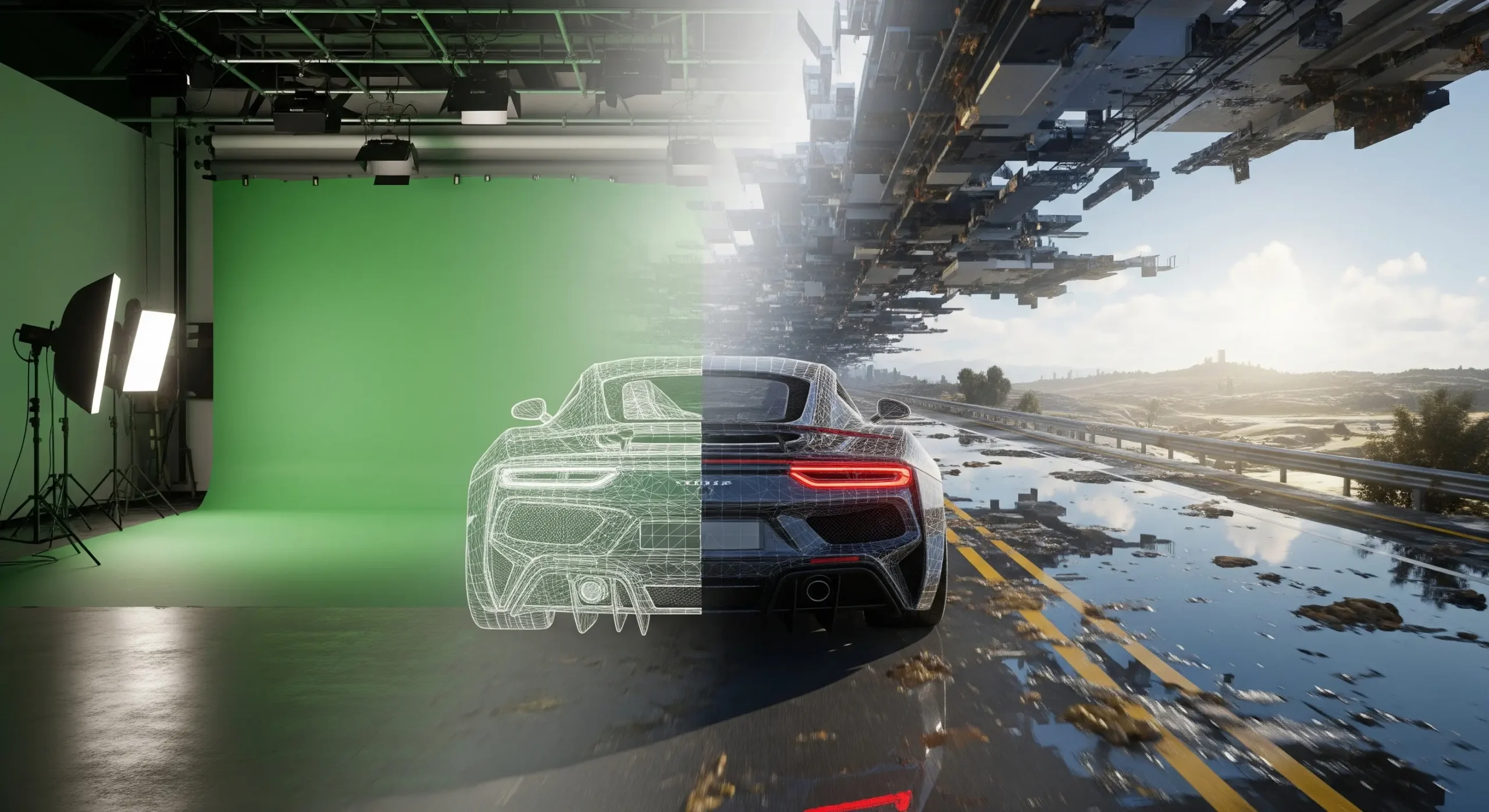
3D product rendering for film production refers to the creation of photorealistic digital models of physical products or props that appear on screen. These assets are built using advanced 3D software, textured with high-resolution materials, lit to match cinematic environments, and rendered to integrate seamlessly with live-action footage or fully CGI scenes.
Unlike traditional advertising renders, film-oriented rendering focuses on realism under motion, extreme close-ups, and complex lighting scenarios. The goal is not just visual appeal, but believability within a cinematic narrative.
Why Los Angeles Film Studios Rely on Digital Product Rendering
Los Angeles remains the global center of film production, housing major studios, post-production facilities, and world-class CGI talent. As productions grow more complex and schedules tighten, studios increasingly turn to digital solutions that offer flexibility without sacrificing quality.
Do film studios use 3D product rendering instead of physical props?
In many cases, yes—but more often, studios use a hybrid approach. Physical props are still valuable for on-set interaction, while digital product rendering is used to enhance, replace, or extend those props in post-production. This approach allows filmmakers to avoid expensive re-fabrication when designs change and enables last-minute creative decisions without reshoots.
Creative and Technical Advantages Over Practical Props
3D product rendering vs practical props for films
From a professional perspective, the comparison comes down to control, scalability, and efficiency. Practical props require materials, storage, transportation, and on-set handling. In contrast, rendered products can be adjusted digitally—changing finishes, colors, logos, or even entire designs without interrupting production.
Digital rendering also ensures consistency. A product can look identical across multiple scenes, lighting setups, or shooting days, which is often difficult to achieve with physical props.
High-End Cinematic Applications
Can 3D product rendering be used for close-up product shots in films?
Absolutely. Close-up shots demand extreme detail, and this is where high-quality 3D rendering excels. Artists can control reflections, surface imperfections, and micro-details that might be impossible to capture practically. For films released in 4K, 8K, or IMAX formats, this level of precision is essential.
What types of products can be rendered for movies?
A wide range of products can be digitally rendered, including consumer electronics, vehicles, weapons, industrial equipment, medical devices, luxury goods, and fictional items designed specifically for the story. This flexibility allows filmmakers to visualize products that do not yet exist or cannot be safely used on set.
Is 3D rendering suitable for hero props in feature films?
Hero props—objects central to the storyline—require absolute visual credibility. 3D rendering allows artists to perfect every aspect of these props, ensuring they withstand prolonged screen time and repeated close-ups. Many studios rely on digital hero props to maintain visual consistency throughout a film.
Production Workflow Advantages for Los Angeles Film Studios
Beyond visual quality, 3D product rendering plays a critical role in optimizing production workflows for film studios operating in Los Angeles’ fast-paced environment:
- Parallel production and post-production workflows
- Reduced risk during on-set filming
- Greater flexibility for late-stage creative decisions
- Improved continuity across reshoots and pick-up scenes
- Easier integration with virtual production and LED volumes
- Streamlined approval cycles with directors and producers
By allowing product assets to be developed independently of principal photography, studios can move forward with filming while visual elements are finalized in parallel. This approach minimizes downtime, supports rapid decision-making, and aligns well with modern virtual production techniques increasingly used across Los Angeles sound stages.
Efficiency Through Asset Reuse

Can CGI product models be reused across multiple scenes?
One of the most valuable benefits of CGI is asset reusability. Once a product is modeled and approved, it can be reused across scenes, lighting conditions, and even future productions. This approach reduces long-term costs and ensures continuity, particularly for franchises and serialized content.
Los Angeles as a Center for Cinematic CGI Excellence
Hollywood product CGI studio
Los Angeles is home to some of the most experienced CGI studios in the world. A Hollywood product CGI studio typically combines artistic expertise with deep technical knowledge of cinematic workflows, color science, and visual storytelling. These studios collaborate closely with directors, cinematographers, and VFX supervisors to deliver assets that align with the film’s vision.
3D rendering studio for film production Los Angeles
A professional 3D rendering studio for film production in Los Angeles offers more than just modeling services. These studios provide end-to-end solutions, including concept development, look development, animation, rendering, and compositing. Their proximity to major studios allows for faster feedback cycles and tighter creative alignment.
Los Angeles CGI product rendering for movies
Los Angeles CGI product rendering for movies is tailored to theatrical standards. From HDR workflows to cinematic lighting simulations, local studios understand the technical and artistic requirements of large-scale film releases, making them a preferred choice for high-end productions.
Achieving Cinematic Realism
How realistic is 3D product rendering for films?
Modern rendering technology has reached a point where digital products are often indistinguishable from real ones. Physically based rendering, advanced shaders, and accurate lighting simulations allow rendered assets to respond to light exactly as real materials do. When combined with skilled compositing, these assets blend seamlessly into live-action footage.
For audiences, the result is immersion. For professionals, it means fewer creative compromises and greater confidence in the final visual output.
Cost Considerations and Production Planning
Pricing for cinematic 3D product rendering
Pricing for cinematic 3D product rendering depends on several factors, including complexity, level of detail, animation requirements, and turnaround time. While high-end rendering represents an upfront investment, it often reduces overall production costs by minimizing reshoots, prop fabrication, and logistical challenges.
For film studios, the value lies in predictability. Digital workflows reduce uncertainty and allow for more accurate budgeting, especially on productions with tight schedules.
Strategic Benefits for Film Studios
For professionals managing film productions in Los Angeles, 3D product rendering delivers strategic advantages that extend beyond visuals:
- Enhanced creative control throughout production
- Faster iteration during post-production
- Consistent product appearance across scenes
- Reduced dependency on physical logistics
- Long-term asset reuse for sequels and spin-offs
- Seamless collaboration between departments and vendors
The added benefit of cross-department collaboration is especially valuable in large-scale productions. Digital product assets can be shared effortlessly between production design, VFX, marketing, and post-production teams. This unified workflow reduces miscommunication, accelerates approvals, and ensures visual consistency from principal photography through final delivery and promotional materials.
Recognized Industry Authority in Film Visual Effects
Many film studios using 3D product rendering follow workflows aligned with standards established by the Academy Software Foundation (ASWF), an industry-backed organization supported by the Academy of Motion Picture Arts and Sciences. ASWF focuses on advancing open-source technologies and best practices used in professional film production and visual effects pipelines.
By aligning 3D product rendering processes with frameworks promoted by ASWF, Los Angeles film studios ensure compatibility, scalability, and long-term asset reliability across productions.
FAQs About 3D Product Rendering for Film Studios
Is 3D product rendering only used in big-budget films?
No. While blockbusters use it extensively, mid-budget and independent films also benefit from rendering due to its flexibility and cost efficiency.
Does digital rendering slow down production timelines?
When planned correctly, it often speeds up production by reducing physical constraints and enabling parallel workflows.
Can rendered products match specific brand guidelines?
Yes. Digital assets can be built precisely to brand specifications, making them ideal for product placements.
Is 3D rendering compatible with live-action footage?
Absolutely. Modern compositing techniques allow seamless integration with real footage.
Do rendered products work for both indoor and outdoor scenes?
Yes. Lighting environments can be simulated to match any location or time of day.
Is Los Angeles still the best place for film-focused CGI work?
For cinematic-quality rendering and close collaboration with studios, Los Angeles remains unmatched.
Conclusion
As the film industry continues to push creative and technical boundaries, 3D Product Rendering for Film Studios in Los Angeles, CA has become an indispensable tool. It empowers filmmakers to achieve cinematic realism, adapt quickly to creative changes, and manage production costs more effectively.
In a city where visual excellence defines success, Los Angeles studios that embrace advanced 3D product rendering are better positioned to meet the expectations of global audiences. For professionals seeking precision, flexibility, and cinematic impact, this technology is shaping the future of film production.