
In today’s fast-paced advertising environment, visual quality is no longer optional—it is the defining factor between a campaign that converts and one that fades into digital noise. For advertising agencies operating in a competitive hub like New York, NY, standing out requires more than creativity alone. It demands precision, flexibility, and visual excellence at scale. This is where 3D Product Rendering for Advertising Agencies in New York, NY has emerged as a powerful solution, enabling agencies to meet tight deadlines, reduce production costs, and deliver stunning visuals across multiple platforms.
As brands demand faster turnarounds and consistent visuals for digital-first campaigns, 3D rendering has become an essential part of modern advertising workflows. This blog explores how professional agencies can leverage this technology to elevate campaign performance and client satisfaction.
Understanding the Foundations of 3D Product Rendering
To fully appreciate its value, it is important to understand what is 3D product rendering. At its core, it is the process of creating realistic, computer-generated images of products using specialized software. These visuals can replicate real-world lighting, materials, textures, and environments without the need for physical photography.
For advertising agencies, this means complete creative control. Products can be visualized before manufacturing, adapted instantly for different campaigns, and customized for multiple markets—all without reshoots or logistical delays.
Why Advertising Agencies in New York Are Adopting 3D Rendering
New York agencies face intense competition, high client expectations, and demanding timelines. Traditional product photography often struggles to keep up with these pressures. 3D rendering, however, offers a scalable and reliable alternative.
Agencies can produce consistent visuals across print, digital, and outdoor formats while maintaining brand accuracy. Whether working with startups or global brands, 3D visuals ensure that creative concepts are not limited by physical constraints or production costs.
How 3D Rendering Elevates Advertising Visuals
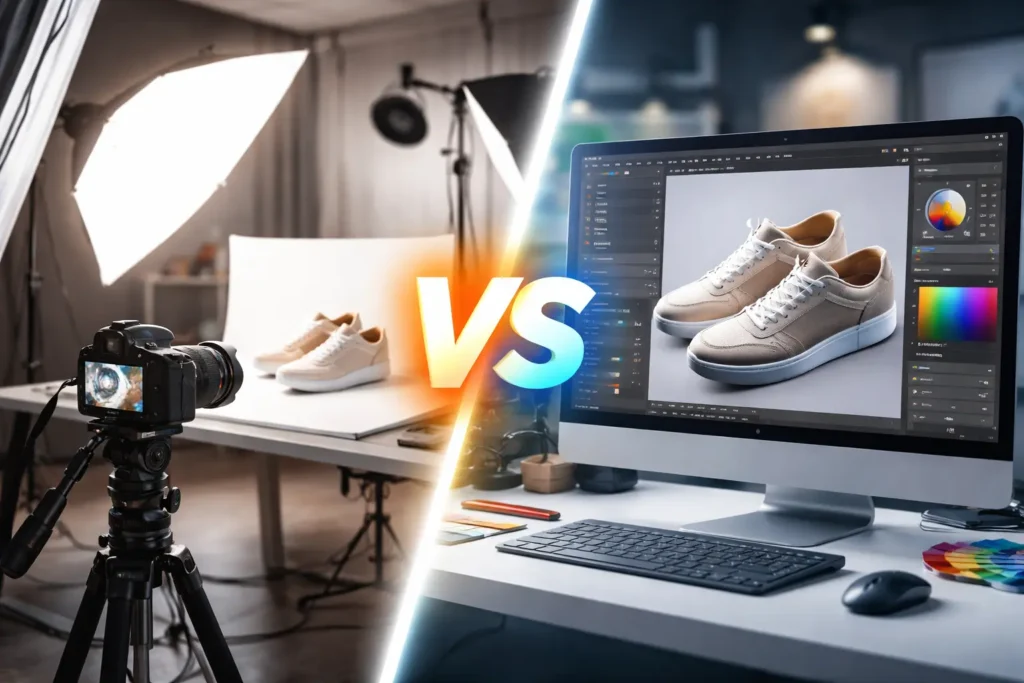
One of the most significant advantages is how 3D product rendering improves ad visuals. Unlike standard photography, 3D renders allow precise control over lighting, angles, and composition. This results in sharper images, cleaner layouts, and visuals that align perfectly with campaign concepts.
Advertising creatives can experiment freely, presenting products in ideal conditions that may not be possible in real life. This flexibility leads to stronger storytelling and higher engagement across digital platforms.
Applications Across Digital Advertising Channels
Modern campaigns are omnichannel by design. 3D product rendering for digital advertising allows agencies to reuse and adapt assets seamlessly for social media, display ads, websites, and video content. Instead of creating new visuals for each platform, a single 3D model can generate endless variations.
This approach ensures consistency while reducing production time—an essential benefit for agencies managing multiple campaigns simultaneously.
Optimizing Visuals for E-Commerce and Online Marketplaces
Many advertising agencies also support e-commerce initiatives for their clients. High-quality visuals are critical for online conversions, especially on competitive platforms. This is where 3D product renders for Amazon listings play a vital role.
By showcasing products with clean angles, accurate textures, and professional lighting, agencies can help brands stand out in crowded marketplaces and improve buyer confidence.
Creating Emotional Connections Through Lifestyle Renders

Beyond technical accuracy, advertising is about emotion and context. Lifestyle 3D product rendering allows agencies to place products in realistic environments that resonate with target audiences. Whether it’s a kitchen scene, office setting, or outdoor environment, these visuals help consumers imagine the product in their own lives.
For agencies, this means greater storytelling potential without the costs of location shoots or complex logistics.
Catalogs and Print Advertising Made Efficient
Print campaigns and catalogs still play a crucial role in many industries. A 3D product render for catalog images ensures consistency across large product lines while maintaining high resolution and visual clarity.
Agencies can update designs quickly, swap colorways, or introduce new products without redoing entire photoshoots—saving both time and budget.
High-End Services for Premium Campaigns
When working with luxury or high-value brands, quality cannot be compromised. Photorealistic 3D product rendering services deliver visuals that are nearly indistinguishable from real photography. These renders meet the standards required for high-profile advertising campaigns, billboards, and premium digital placements.
For New York agencies serving global brands, this level of realism helps maintain credibility and brand prestige.
Common Tools Behind Professional 3D Rendering
Agencies often collaborate with specialized studios that rely on advanced tools and workflows. Understanding the software used for 3D product rendering—such as industry-standard modeling, texturing, and rendering platforms—helps agencies communicate effectively with production partners and ensure consistent results.
While agencies may not operate the software directly, awareness of the tools involved supports smoother collaboration and better creative outcomes.
Why 3D Rendering Is Cost-Effective for Agencies
From a business perspective, 3D rendering reduces long-term costs. There are no studio rentals, shipping expenses, or reshoot fees. Once a product model is created, it becomes a reusable asset that can support multiple campaigns, regions, and formats.
For agencies managing multiple clients, this efficiency directly translates into higher profitability and faster delivery.
Supporting Advertising Strategy with 3D Visuals
Strategic advertising relies on flexibility. 3D product renders for ads allow agencies to test concepts, adapt messaging, and localize visuals without starting from scratch. This adaptability is particularly valuable in performance-driven campaigns where rapid optimization is required.
Partnering with the Right 3D Rendering Experts
To maximize results, agencies should work with experienced 3D rendering partners who understand advertising standards and brand guidelines. Reputable studios offer consultation, revisions, and scalable solutions tailored to agency workflows.
Frequently Asked Questions (FAQs)
1. Is 3D product rendering suitable for all advertising industries?
Yes, it is widely used across consumer goods, electronics, fashion, automotive, and industrial sectors.
2. Can 3D renders fully replace traditional photography?
In many cases, yes. Especially for digital-first campaigns, 3D rendering offers greater flexibility and consistency.
3. How long does it take to produce 3D product visuals?
Timelines vary by complexity, but most projects are faster than traditional photoshoots once the workflow is established.
4. Are revisions easier with 3D rendering?
Absolutely. Changes to colors, materials, or angles can be made digitally without reshooting.
5. Do agencies need in-house 3D teams?
Not necessarily. Many agencies partner with specialized studios to access expertise without additional overhead.
6. Does 3D rendering support future campaign scalability?
Yes. Once created, 3D assets can be reused and adapted for future campaigns, platforms, and markets.
Conclusion
For agencies seeking to remain competitive in one of the world’s most demanding advertising markets, 3D Product Rendering for Advertising Agencies in New York, NY is more than a visual tool—it is a strategic asset. By delivering consistent, high-quality, and adaptable visuals, agencies can meet client expectations while optimizing costs and timelines.
As advertising continues to evolve toward digital-first experiences, 3D product rendering stands as a future-ready solution that empowers agencies to create impactful, scalable, and visually compelling campaigns.