Polygons are the building blocks of 3D models, crucial to nearly every project within 3D modeling, from video games to animated films, and even virtual reality. In this article, we’ll explore polygons in 3D modeling, their significance, the different types of polygons used, and how they influence the creation of realistic and optimized 3D models.
What Are Polygons in 3D Modeling?
At its core, a polygon is a flat, closed shape with straight edges. In 3D modeling, polygons serve as the fundamental units that make up the surface of 3D objects. These polygons are typically triangles, quadrilaterals, or other multi-sided shapes that form the mesh of a 3D model. A 3D polygon shape, often composed of a series of polygon 3D elements, defines the object’s surface and contributes to its visual appearance.
How Does Polygon Modeling Work?
Polygon modeling refers to the technique used to create 3D models by manipulating these polygons. The process involves combining and shaping multiple polygons in 3D to build complex surfaces and objects. This method is popular in industries like game design, animation, and CAD (Computer-Aided Design), as it allows for high levels of detail and flexibility.
To create a 3D polygon model, an artist begins by defining the vertices, edges, and faces that make up the polygon. As they refine the model, they continue to adjust and add more 3D polygons, ultimately building up the 3D structure of the object.
The Role of Polygon Texture in 3D Modeling
Textures are essential to making 3D models look realistic, and polygon texture mapping plays a crucial role in this. By applying textures to polygons, 3D artists can simulate the appearance of different materials, like wood, metal, or fabric, on a 3D object. This process involves wrapping a 2D image (texture map) around the polygons of a 3D model, which gives it more lifelike detail and realism.
Types of Polygons Used in 3D Models
There are several 3D polygon shapes commonly used in 3D modeling, each with its specific advantages and use cases:
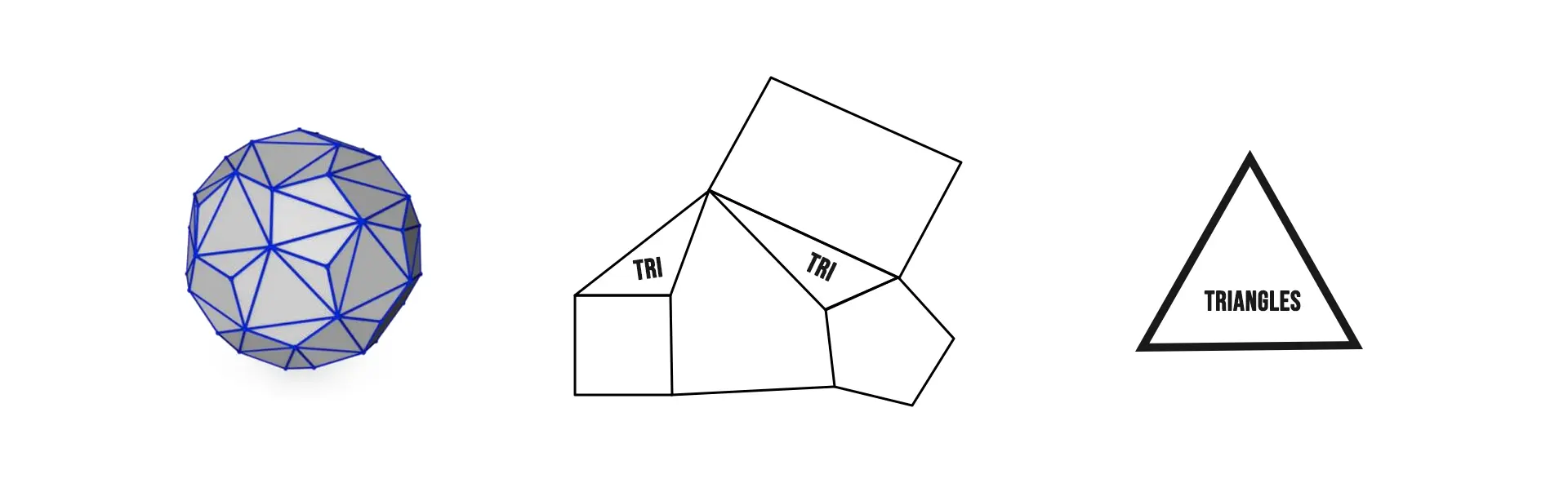
1. Triangles
- The most basic and common polygon in 3D modeling, triangles are the simplest form of polygons and are used extensively in graphics engines because they are computationally efficient. Triangles form the core of most 3D polygon models because every 3D shape can be broken down into smaller triangles.
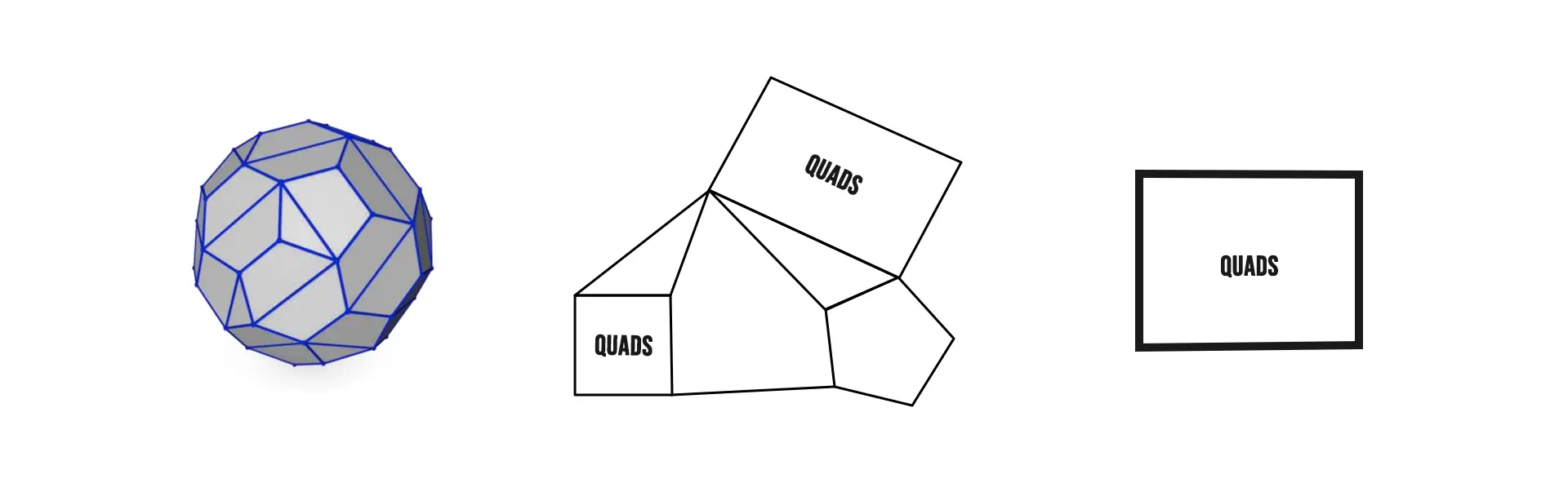
2. Quads
- Quads, or quadrilaterals, are polygons with four sides. They are frequently used in polygon modeling for more organic shapes, such as characters or complex environments. Quads are particularly useful for animation because they deform more predictably.
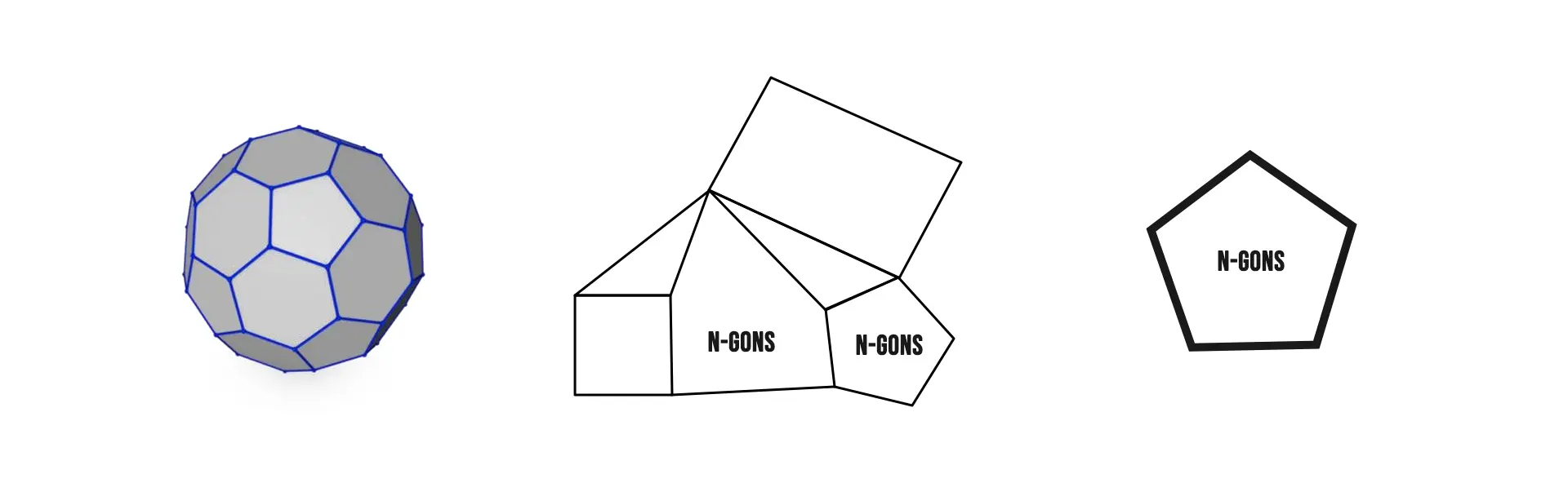
3. N-Gons
- An n-gon is a polygon with more than four sides. While they can simplify certain tasks in modeling, n-gons are often avoided in high-quality models because they can create irregularities in the mesh and complicate the process of texturing and rigging.
4. Polygons with Complex Structures
- A polygonal model might use a mix of triangles, quads, and n-gons, depending on the desired level of detail and functionality. For instance, in architectural visualization, 3D polygons may be used to represent detailed textures and structures like walls, windows, and furniture.

Facts About Polygons in 3D Modeling
Understanding polygons is crucial for anyone working in 3D graphics, whether you’re creating models for movies, games, or simulations. Here are some key facts to know:
- Polygons define the geometry: Every 3D model’s shape and structure are based on polygons. The more polygons a model has, the higher the detail level, but this also increases computational complexity.
- Polygons can be manipulated: A model polygon can be moved, scaled, or rotated to change the shape of the 3D model. This flexibility is vital in both designing new models and modifying existing ones.
- Polygon count matters: The polygon count—the number of polygons in a 3D model—can significantly impact the performance of real-time applications like video games or VR. High polygon counts can lead to slower performance, while low polygon counts may result in less detail.
Why Are Polygons Important in 3D Design?
Polygons are essential for the visual integrity of 3D models. When you work with polygonal models, you’re essentially shaping the visual appearance of an object. These polygons define the object’s geometry, and the way they are structured influences how the model will look and behave when animated.
Polygons also influence how textures are mapped onto the model’s surface. Properly structured polygon meshes make it easier to apply textures seamlessly and without distortion, which is critical for 3D texture mapping.
What Does Polygonal Mean in 3D Modeling?
The term polygonal in 3D modeling refers to the use of polygons to create shapes and surfaces. Polygonal modeling techniques involve shaping and manipulating these polygons to form a 3D object. The word “polygonal” essentially means “made up of polygons” in this context, which highlights its importance in 3D modeling workflows.
How Does Polygon Look Like in 3D?
A polygon in 3D typically has multiple faces that define the shape of an object. Each face is formed by connecting vertices, with edges that connect these vertices. For example, a 3D polygon could be a simple triangle, a four-sided square (quad), or even a more complex shape with several sides. The arrangement of these polygons creates the overall form of the model, whether it’s a realistic human character, an architectural structure, or a complex mechanical object.
Optimizing Polygons in 3D Models
One important aspect of polygon modeling is optimization. A model with excessive polygons can be too heavy for real-time applications, leading to performance issues. Polygon optimization ensures that the model retains its visual quality without unnecessary complexity.
In practice, polygon optimization involves a few core techniques:
- Retopology — rebuilding a high-poly mesh with a cleaner, more efficient polygon flow, reducing count while preserving the shape’s integrity. This is especially important before rigging or animation, since a clean topology deforms more predictably.
- LOD (Level of Detail) modeling — creating multiple versions of the same model at different polygon densities, so a high-detail version is used up close and a simplified version is swapped in from a distance. This is standard practice in game engines and real-time visualization to keep performance smooth without sacrificing visual quality where it matters most.
- Poly reduction / decimation — using software tools to automatically simplify a mesh while trying to preserve silhouette and detail, often used as a starting point before manual cleanup.
The right balance depends entirely on the end use. A model destined for a still, photorealistic render can afford a much higher polygon count than one intended for a real-time 3D configurator or AR app, where every extra polygon has a direct performance cost.
At 4dviz Studio, we build both low-poly and high-poly models depending on the project’s purpose — high-poly for photorealistic stills and close-up detail work, and optimized low-poly versions for real-time use cases like AR viewers, product configurators, and game-ready assets. Polygon optimization plays a key role in creating assets that are suitable for photorealistic product rendering and commercial visualization projects.